
← Blog · 6 October 2026
AI Data Centres and Your Power Bill: Will They Push Up Electricity Prices?
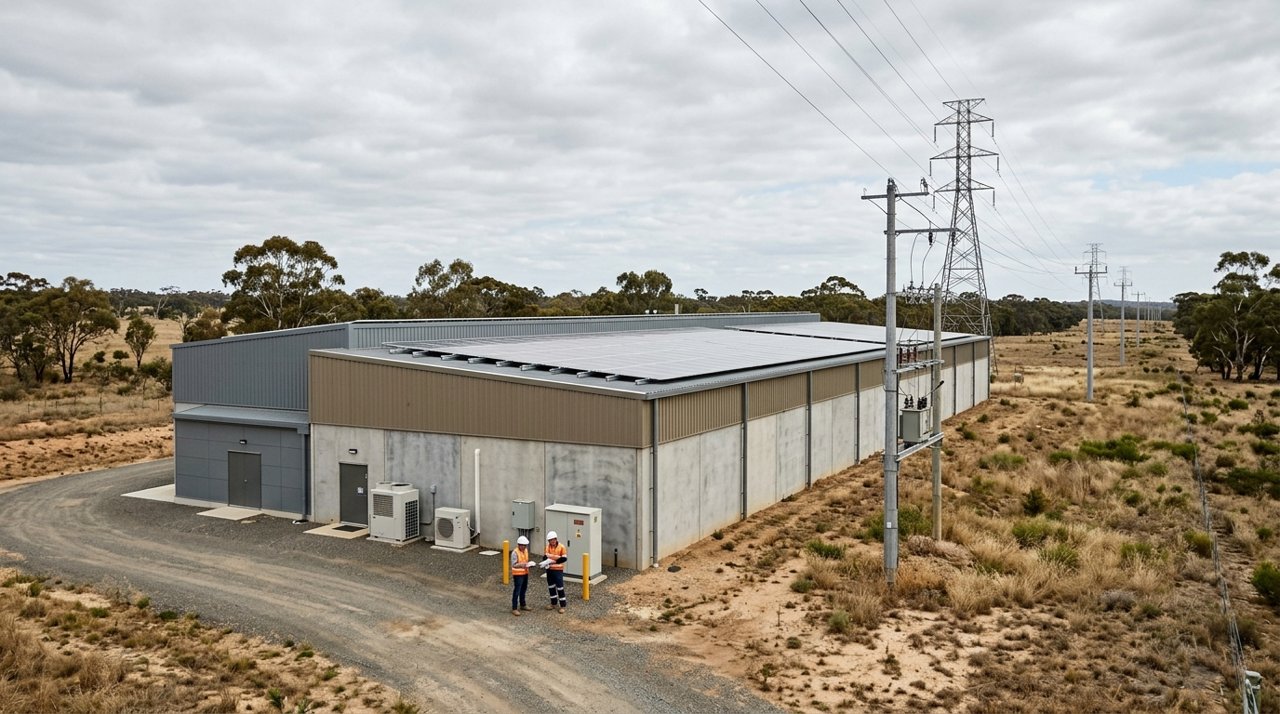
AI is suddenly everywhere, and so are the headlines: enormous data centres, enormous power demand, and warnings that household bills will cop the cost. If you’re a Tasmanian homeowner weighing up solar, it’s a fair question to ask before you spend money.
Here’s the short version: nobody can honestly tell you yet whether AI data centres will push Tasmanian power prices up. It depends on rules that are still being written. What you can control is how much electricity you buy at all — and that’s where rooftop solar does its work.
Are AI data centres really using that much electricity?
Globally, yes — and growing fast, though they’re still a small slice of total demand. The International Energy Agency’s Energy and AI report (April 2025) estimated data centres used about 415 TWh in 2024, roughly 1.5% of world electricity, rising to about 945 TWh by 2030.
The IEA’s 2026 update put 2025 use at about 485 TWh — up 17% in a year — and still around 950 TWh by 2030. Importantly, it also noted the energy used per AI task is falling by at least an order of magnitude a year. The machines are getting hungrier; the work they do is getting cheaper to run.
How much Australian electricity do data centres use?
Much less than the headlines suggest, and almost none of it in Tasmania. AEMO’s 2026 Electricity Statement of Opportunities (August 2026, central scenario) estimated data centres on the east-coast grid used about 5 TWh in 2025–26 — about 3% of demand, from 165 sites.
| Data centre electricity use | Share of demand | |
|---|---|---|
| World (IEA, 2025) | ~485 TWh | ~1.5% |
| East-coast Australia (AEMO, 2025–26) | ~5 TWh | ~3% |
| East-coast Australia (AEMO forecast, 2035–36) | ~34 TWh | ~13% |
AEMO forecasts about 15 TWh by 2029–30 and about 34 TWh by 2035–36. New South Wales and Victoria account for more than 85% of it. Tasmania is under 1%.
AEMO also added three big caveats: 36% of the projects listed a year earlier had been cancelled, connected data centres use on average only about 27% of the grid capacity they’ve reserved, and it describes the whole outlook as highly uncertain.
Has this pushed up household bills anywhere already?
In the United States, yes — and it’s the clearest warning sign available. In PJM, the largest US grid covering 13 states, the capacity price jumped from US$28.92 per MW-day for 2024/25 to US$269.92 for 2025/26, then sat at the price cap (about US$325–$333) in later auctions. The total yearly cost rose from US$2.2 billion to US$16.4 billion.
PJM’s independent market monitor attributes about 38% — US$6.3 billion — of the 2028/29 auction cost to data-centre demand. Those costs flow through to household bills there.
Australia doesn’t run a capacity market like PJM’s, so the mechanism isn’t identical. But the lesson travels: when very large new loads arrive faster than new supply, somebody pays, and without clear rules that somebody can be households.
What is Australia doing about who pays?
On 22 July 2026, federal Energy Minister Chris Bowen lodged rule-change requests so data centres pay more of the network costs they cause. The energy rule-maker, the AEMC, consulted on them in September 2026. That process is the single biggest factor in whether any of this reaches your bill.
CSIRO’s GenCost report (July 2026) noted a flow-on effect already visible: gas-turbine prices are rising partly because of data-centre demand worldwide, which feeds into the cost of building new generation everywhere, Tasmania included.
What’s actually proposed for Tasmania?
A developer has asked Hydro Tasmania for about 450 MW of supply across three proposed AI data-centre sites — Launceston, Bell Bay and Wesley Vale. That’s up to roughly 30% of Tasmania’s current electricity use, which is why it matters here despite Tasmania’s tiny share of the national picture.
Where it stands:
- Hydro Tasmania already has a 104 MW, three-year supply contract for the Launceston site.
- It says it will decide on the larger request by the end of 2026, and that it won’t sign anything that harms existing customers.
- The developer has pledged to fund 2 MW of new renewable generation for every 1 MW it uses.
- The Tasmanian Government released draft expectations for data centres on 8 September 2026 — requiring new renewables, a data-centre-funded share of network costs, and grid stability. Public comments close 12 October 2026, so that one’s still open.
We covered the grid-reliability side of this separately in The AI Data Centre Boom: What It Means for Tasmania’s Power Grid.
Could big new demand actually make power cheaper?
It’s possible, and it deserves a mention. Research by the US Lawrence Berkeley National Laboratory found that states with faster electricity demand growth from 2019 to 2024 actually saw lower average prices, with no significant effect on residential prices — because fixed network costs get spread over more kilowatt-hours sold.
The researchers were clear the long-run picture is unclear. Efficiency keeps improving and forecasts keep changing. Treat anyone who’s certain about 2035 with polite scepticism.
So what should a Tasmanian household actually do?
Focus on the part you control: how many kilowatt-hours you buy, and when you buy them. That’s true whether prices rise, fall or sit still.
Use your own power rather than selling it. Aurora Energy’s regulated feed-in tariff is 9.276 c/kWh from 1 July 2026 (up from about 8.8c), while importing costs roughly 28–30 c/kWh. Every unit you use yourself is worth about three times a unit you export.
Know your tariff. Tasmania’s residential tariffs are not interchangeable:
- Tariff 93 — the default since 1 July 2024 for every new or upgraded connection. Time-of-use, whole-of-home. Peak is weekdays 7–10am and 4–9pm (8–11am and 5–10pm in daylight saving); everything else, including all weekend, is off-peak.
- Tariff 31 and 41 — the legacy flat-rate pair, closed to new installations on 30 June 2024. Existing homes may stay on them. Neither is time-of-use.
- Tariff 97 — the opt-in CER tariff for homes with solar, a battery or an EV. It’s the only one with a super off-peak rate (midnight–4am every day, weekends included). Peak runs weekdays 7–10am and 4–10pm — an hour longer in the evening than Tariff 93 — and it carries an excess demand charge above 8.5 kW. Whether you can get a Tariff 97 plan depends on your retailer.
Size for the home you’re heading towards. For most households planning to electrify — EV, heat pump, induction cooking — around 13kW of panels on a 10kW inverter (the 133% oversizing rule) is the sensible default now, and TasNetworks allows a 10kW single-phase inverter, so three-phase usually isn’t needed. A low-use home with no electrification plans may genuinely suit something smaller.
Be realistic about batteries. The federal Cheaper Home Batteries Program takes roughly 30% off an eligible battery if your system and battery meet the program rules, and it tapers each year to 2030. There’s no separate Tasmanian state rebate. Tasmania’s relatively cheap power and fair feed-in tariff mean batteries generally pay back more slowly here than on the mainland — solar alone is the faster payback. No vendor VPP operates in Tasmania, but wholesale spot-price exposure is available from some retailers, and automated control can charge a battery when spot prices go negative and avoid peak imports. (We run exactly that setup on our own systems.) For a typical Aurora-tariff household, the honest case for a battery is self-consumption plus outage backup.
The practical takeaway
Don’t make a solar decision based on a prediction about AI. Make it based on your own bill.
Pull out your last two Aurora bills, find which tariff you’re on, and look at how many kilowatt-hours you use and when. If you’re on Tariff 93 and most of your use lands in the weekday evening peak, shifting the dishwasher, washing machine and hot water into the middle of the day costs nothing and starts working immediately — before a single panel goes on the roof. Then revisit the AEMC rule changes and Hydro Tasmania’s decision at the end of 2026, when there’ll be something real to react to.
This guide is written by the Tasmanian solar team at Solar Generation Tasmania. We’re locals who like talking about this stuff — if something here raised a question, we’re happy to help you make sense of it.
#solargentas #solargen #solargenerationtasmania
Published by Solar Generation Tasmania. General information current as at publication — rebates, tariffs and prices change, so confirm current figures before deciding.
Thinking about solar for your place?
Tell us a little about your home and a local Tasmanian installer will put together a free, no-obligation assessment — system, battery and the rebates you qualify for.
- Honest advice for Tasmanian conditions (Zone 4 sun, hydro grid)
- We apply every rebate you’re eligible for
- Local installers — not a mainland call centre
- SAA-accredited, with degree-qualified owners and 10+ years in tech & solar