
← Blog · 31 July 2026
Choosing a Solar Installer in Tasmania: What to Look For — A 2026 Guide
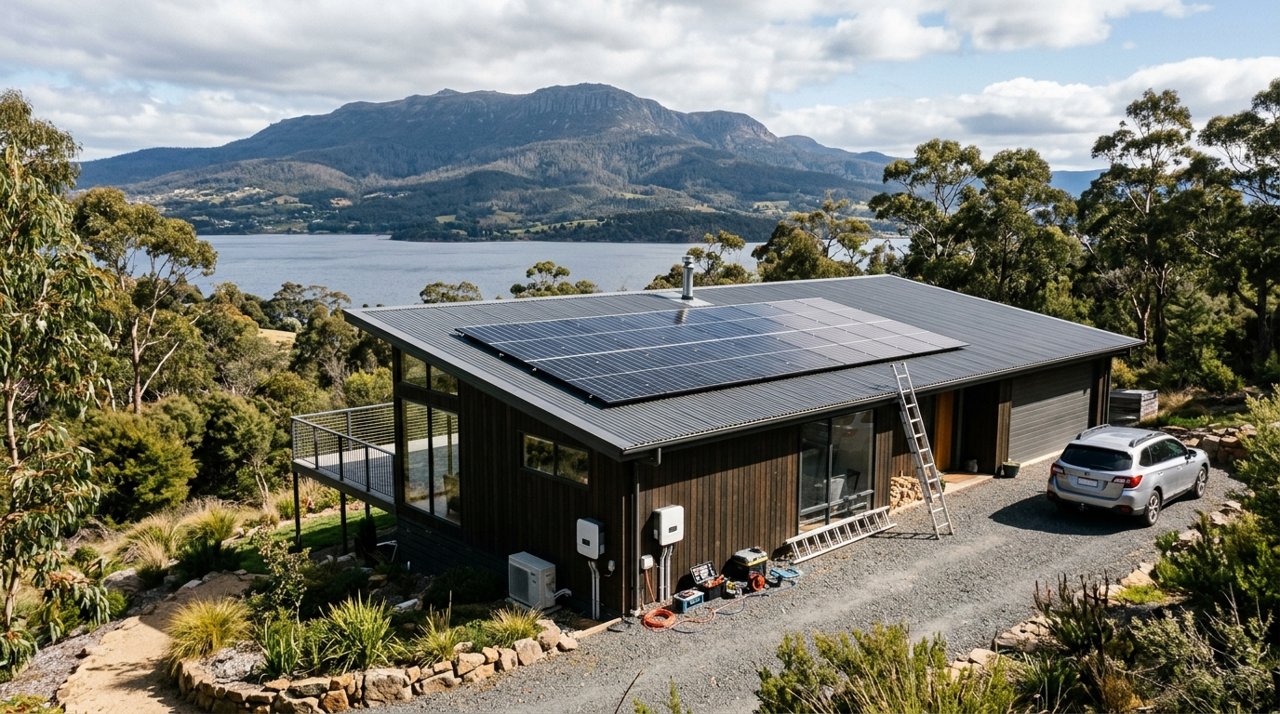
Yes, for most households, installing solar panels is a smart financial decision. The key is to use the power you generate yourself, because the price you pay for electricity from the grid is much higher than the credit you get for sending your excess solar power back. With electricity prices around 28-30 cents per kilowatt-hour (c/kWh) and the solar feed-in tariff from Aurora Energy at 9.276 c/kWh from July 2026, the real savings come from running your appliances during the day.
The upfront cost of a system is also significantly reduced by the federal Small-scale Renewable Energy Scheme (SRES) rebate. Tasmania is in Zone 4 for this scheme, which provides a healthy discount at the point of sale. For a typical family home that plans to electrify in the future (think electric vehicles or heat pumps), a well-sized solar system can lead to a payback period of roughly 4 to 6 years.
What size solar system should I get?
For a typical Tasmanian home looking to future-proof, a system with around 13kW of panels paired with a 10kW inverter is now the smart default. This might sound large, but it’s designed to cover your current usage and accommodate future additions like an electric vehicle (EV), a heat pump hot water system, or induction cooking.
Here’s why this size makes sense:
- Future-Proofing: An average EV adds about 2,000-3,000 kWh to a home’s annual electricity usage. A heat pump adds another 2,000-4,000 kWh. A larger system ensures you can power these without constantly buying from the grid.
- TasNetworks Rules: In Tasmania, TasNetworks allows a single-phase connection to have up to a 10kW inverter, which is sufficient for most residential properties. This means you likely won’t need an expensive three-phase power upgrade.
- Inverter Oversizing: It’s standard practice to “oversize” your solar panel array by up to 133% of your inverter’s capacity. This means a 10kW inverter can support about 13.3kW of panels. This helps generate more consistent power on overcast days and during the edges of the day, when the sun is low.
Of course, if you have a smaller home, use very little electricity, and have no plans to electrify, a smaller 6.6kW system might be a more suitable and affordable option.
Should I get a battery with my solar panels?
This is a more complex question for Tasmanians. While a battery allows you to store your cheap daytime solar power to use at night, the financial case here is less clear-cut than on the mainland.
A new federal government incentive, the Cheaper Home Batteries Program, can help. Starting from 1 July 2025, this program may provide a significant discount on the upfront cost of an eligible battery system when paired with solar panels. For instance, it could reduce the cost by around $250 per usable kWh for the first 14kWh of battery capacity in 2026, with the rebate tapering in subsequent years.
However, even with this help, the payback period for the battery portion of your system will likely be longer than for the panels alone, perhaps in the range of 7 to 12 years. This is because Tasmania’s grid is already powered by hydro, so there are no large-scale “Virtual Power Plant” (VPP) programs that pay you for sharing your battery power. The main value of a battery in Tasmania is:
- Maximising Self-Consumption: Storing solar energy to avoid buying expensive grid power in the evening.
- Backup Power: Providing power during a blackout, which can be a huge benefit in regional areas.
| Factor | Solar Panels Only | Solar Panels + Battery |
|---|---|---|
| Primary Goal | Reduce daytime electricity bills. | Reduce daytime & evening bills; provide backup power. |
| Upfront Cost | Lower | Higher (even with potential rebates) |
| Typical Payback | Shorter (e.g., 4-6 years) | Longer (e.g., 7-12 years) |
| Complexity | Simpler installation. | More complex; requires more space. |
| Best For | Households who can shift most of their power use to daytime hours. | Households with high evening usage or who value blackout protection. |
How do I choose a good solar installer?
Choosing the right installer is the most important decision you’ll make. A quality installation from a reputable local company will ensure your system performs safely and effectively for decades. A poor installation can lead to underperformance, leaks, and electrical hazards.
Here’s a checklist of what to look for:
- Solar Accreditation Australia (SAA) Accreditation: This is non-negotiable. Ensure the individual installer on your roof holds current SAA accreditation (SAA accredits people, not companies). This is a prerequisite for receiving the federal STC rebate.
- Local Tasmanian Presence: A company with a physical office and warehouse in Tasmania is accountable. They understand local network rules (TasNetworks), weather conditions, and council regulations. Avoid high-pressure “fly-in, fly-out” sales organisations.
- In-House Team: Ask if they use their own dedicated, in-house installers or if they subcontract the work out. In-house teams generally offer better quality control and accountability.
- Quality Components: A good installer will recommend and use reputable brands for panels, inverters, and racking that have a proven track record in Australia and strong warranty support. Don’t just focus on the cheapest price; ask why they recommend certain brands.
- Transparent Quoting: A detailed quote should clearly itemise all components, labour costs, and the estimated STC rebate. It should also include a site-specific performance estimate and a clear explanation of all warranties.
- Customer Reviews and History: Look for a company with a long history of positive, verifiable reviews from other Tasmanians. Check their Google Reviews and ask if you can see examples of their local work.
What are the common mistakes to avoid?
- Choosing the Cheapest Quote: Ultra-cheap systems often use lower-quality components with poor warranty support and may involve rushed, substandard installation work. In solar, you generally get what you pay for.
- Ignoring Your Roof: A good installer will conduct a thorough assessment of your roof’s condition, age, and orientation. Installing panels on a roof that needs replacing soon is a costly mistake.
- Not Understanding Your Usage: Before getting quotes, look at your power bills. Understand when you use electricity. If you’re out all day, your savings will be limited unless you can shift your usage (e.g., run the dishwasher on a timer) or invest in a battery.
- Falling for High-Pressure Sales: Be wary of “special one-day-only” deals or salespeople who can’t provide clear, technical answers. A professional company will give you the time and information you need to make a considered decision.
Making the switch to solar is a big investment, but it’s one that pays dividends for your wallet and the environment. By doing your research and choosing a quality local installer, you can ensure you get a system that serves your family well for many years to come.
This guide was written by the team at Solar Generation Tasmania to help our fellow Tasmanians make informed energy choices.
#solargentas #solargen #solargenerationtasmania
Published by Solar Generation Tasmania. General information current as at publication — rebates, tariffs and prices change, so confirm current figures before deciding.
Thinking about solar for your place?
Tell us a little about your home and a local Tasmanian installer will put together a free, no-obligation assessment — system, battery and the rebates you qualify for.
- Honest advice for Tasmanian conditions (Zone 4 sun, hydro grid)
- We apply every rebate you’re eligible for
- Local installers — not a mainland call centre
- SAA-accredited, with degree-qualified owners and 10+ years in tech & solar