
← Blog · 20 June 2026
Federal Battery Rebate Overhauled as Major Tasmanian Grid Upgrades Move Forward
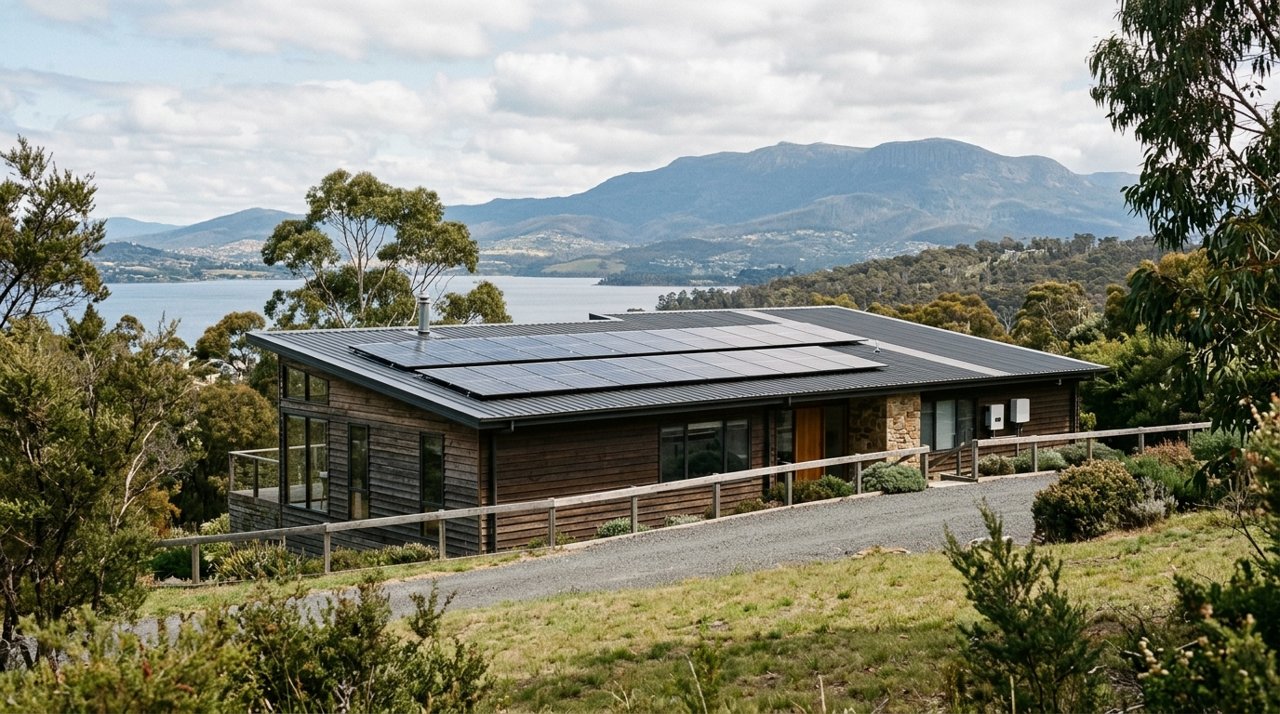
A significant adjustment to the federal government’s popular home battery subsidy and major progress on Tasmania’s electricity grid infrastructure have marked the past month, shifting the landscape for homeowners considering investing in solar and storage.
The most immediate change for Tasmanians came into effect on 1 May 2026, with a national overhaul of the Cheaper Home Batteries Program. The federal Department of Climate Change, Energy, the Environment and Water announced that while the rebate remains, its structure has been redesigned to manage the scheme’s huge popularity. The program, which offers an upfront discount on new battery installations, was so successful that its initial $2.3 billion budget was projected to run out in early June 2026, years ahead of schedule. In response, the government has injected an extra $4.9 billion into the scheme, extending its life to 2030, but has altered how the discount is calculated.
Previously a flat-rate discount, the rebate now operates on a tiered system. Homeowners receive the full value of the incentive on the first 14 kilowatt-hours (kWh) of a battery’s usable capacity. For capacity between 14kWh and 28kWh, the incentive value drops to 60%, and for capacity between 28kWh and 50kWh, it falls to just 15%. This change, according to the government, is designed to encourage “right-sized” battery systems for households.
Furthermore, the value of the rebate, which is delivered via Small-scale Technology Certificates (STCs), will now decrease more rapidly. The government confirmed the STC factor will be reduced every six months, rather than annually. For installations from May to December 2026, the value is based on an STC factor of 6.8, down from 8.4 in early 2026. For a typical 10kWh battery, this still represents a discount of thousands of dollars, but the incentive for larger systems is now proportionally smaller and the overall rebate will shrink more quickly in the years ahead.
On the home front, TasNetworks has made significant announcements regarding the state’s grid. In mid-May, the network operator confirmed it had reached financial close for Stage 1 of the North West Transmission Developments (NWTD). This is a major infrastructure project involving 129km of new and upgraded transmission lines from Cressy to Burnie, designed to support the Marinus Link interconnector and connect new renewable energy generation. Following this, in early June, TasNetworks highlighted its ongoing work replacing ageing 1949-era transmission towers along the 71km Burnie to Smithton corridor to ensure network reliability for homes and industry in the north-west.
These grid upgrades are crucial as Tasmania’s large-scale renewable capacity grows. Reinforcing this, on 23 May 2026, the Tasmanian Government welcomed the news that the proposed Weasel Plains Solar Farm had secured federal backing through the Capacity Investment Scheme, a project with the potential to power around 30,000 homes.
At the national level, the Australian Energy Market Operator (AEMO) is preparing to release its 2026 Integrated System Plan on June 25. Speaking at Australian Energy Week in mid-June, AEMO’s CEO Daniel Westerman signalled the plan will have a strong focus on the role of “consumer energy resources” like rooftop solar and home batteries in the future grid. This aligns with a push for innovation, with the Australian Renewable Energy Agency (ARENA) announcing on 19 June 2026 a $95.4 million funding extension for the Australian Centre for Advanced Photovoltaics to accelerate research into next-generation, high-efficiency solar cell technology.
No changes have been announced for Tasmania’s minimum solar feed-in tariff, which remains at 8.782 cents per kWh for the period ending 30 June 2026. The Tasmanian Economic Regulator is expected to announce the rate for the 2026-27 financial year in late June. (Update, 16 October 2026: the Regulator set the 2026-27 minimum feed-in tariff at 9.276 c/kWh from 1 July 2026.)
These developments show a national focus on refining incentives for home batteries while Tasmania makes foundational investments in its grid to support future energy needs.
#solargentas #solargen #solargenerationtasmania
Published by Solar Generation Tasmania. General information current as at publication — rebates, tariffs and prices change, so confirm current figures before deciding.
Thinking about solar for your place?
Tell us a little about your home and a local Tasmanian installer will put together a free, no-obligation assessment — system, battery and the rebates you qualify for.
- Honest advice for Tasmanian conditions (Zone 4 sun, hydro grid)
- We apply every rebate you’re eligible for
- Local installers — not a mainland call centre
- SAA-accredited, with degree-qualified owners and 10+ years in tech & solar