
← Blog · 15 July 2026
Government Solar Rebates in Tasmania: What You Can Actually Claim in 2026
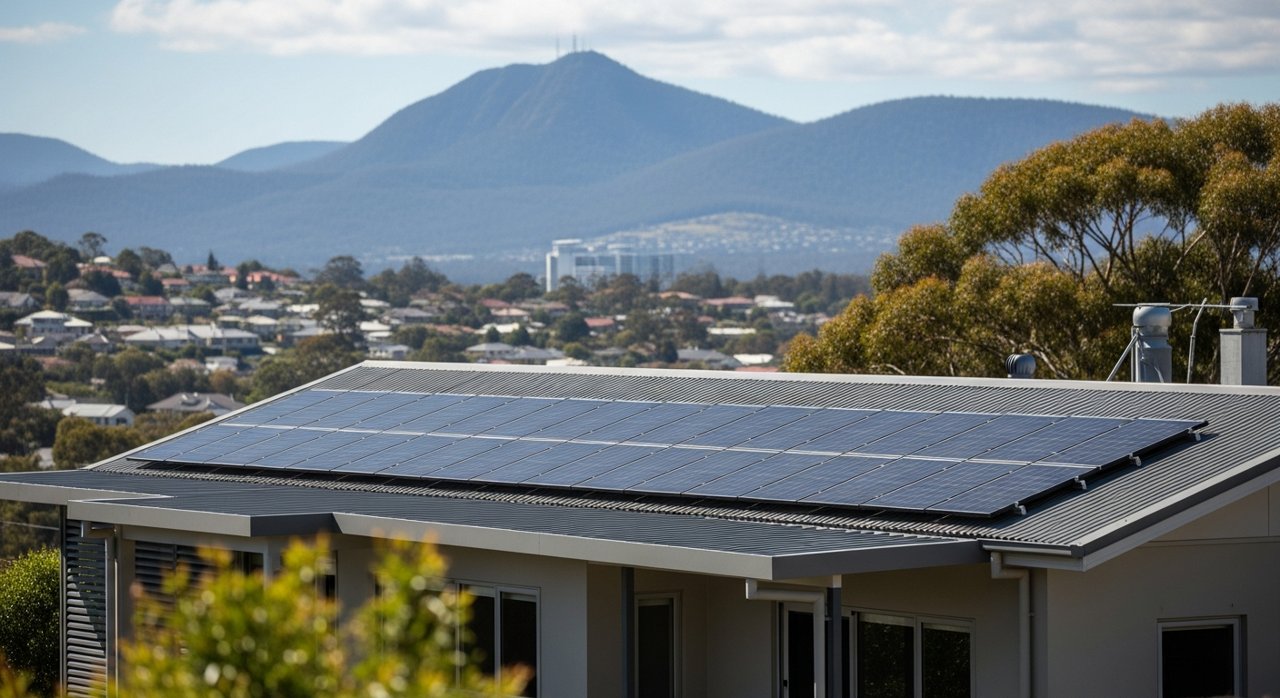
In 2026, Tasmanian households can access two main federal government incentives: one for installing solar panels and another for adding a battery. The main solar panel rebate comes from the Small-scale Renewable Energy Scheme (SRES), which provides an upfront discount on the system’s cost. For batteries, the Cheaper Home Batteries Program offers a significant discount on eligible battery systems paired with solar. There are currently no separate state-based rebates for solar or batteries in Tasmania.
How does the federal solar panel rebate (SRES) work?
The SRES provides a point-of-sale discount on your solar system, not a cash-back payment after the fact. Your installer will claim Small-scale Technology Certificates (STCs) on your behalf and the value is simply taken off your invoice. The amount depends on your system’s size and your location. Tasmania is in STC Zone 4, which means it receives a slightly lower rebate than sunnier mainland locations, but it still provides a substantial saving. This rebate amount decreases every January, so the value in 2026 is less than it was in 2025.
Is there a rebate for solar batteries in Tasmania?
Yes, Tasmanian homeowners can get a discount on a new battery through the federal Cheaper Home Batteries Program, which started on 1 July 2025. This program can reduce the upfront cost of an eligible battery by around 30%. The discount is calculated per kilowatt-hour (kWh) of usable battery capacity and tapers for larger systems. For example, in 2026, the full rate applies to the first 14kWh of capacity, with reduced rates for capacity between 14-28kWh and 28-50kWh. The battery must be paired with a new or existing solar panel system to be eligible.
Why is self-consumption so important in Tasmania?
Using the solar power you generate yourself, known as self-consumption, is the key to maximising savings in Tasmania. The price you pay to import electricity from the grid (around 28-30 c/kWh) is much higher than the modest feed-in tariff you receive for exporting your excess solar (around 9.276 c/kWh from 1 July 2026). Every kilowatt-hour of solar power you use at home directly saves you from buying expensive grid power, making it far more valuable than the credit you get for sending it back to the grid.
Value of 1kWh of Solar in Tasmania (2026):
- Used in your home (self-consumed): Worth ~28-30 cents (the amount you avoid paying Aurora Energy).
- Exported to the grid: Worth 9.276 cents (the amount Aurora Energy pays you).
What size solar system should I get?
While 6.6kW systems were once standard, a larger system of around 13kW of panels paired with a 10kW inverter is now a smart, future-proof choice for many Tasmanian homes. This is because household electricity use is set to rise with the switch to electric vehicles (EVs), heat pump hot water systems, and induction cooktops. A larger system helps meet this future demand.
TasNetworks, the state’s network operator, allows up to a 10kW inverter for a standard single-phase home, which covers most properties in Tasmania. This allows you to “oversize” the panel capacity by up to 133% of the inverter’s rating and still be eligible for the SRES rebate. This oversizing helps generate more consistent power throughout the day, especially in the mornings, afternoons, and on overcast days. However, if your energy use is very low and you don’t plan to electrify, a smaller system may be more suitable.
Is a battery worth it in Tasmania?
A battery can be a great addition, but it’s important to be realistic about the financial return in Tasmania. While the federal battery rebate helps significantly, the payback period for a battery is generally longer here (around 7-12 years) compared to solar panels alone (around 4-6 years).
The main financial benefit of a battery in Tasmania is maximising self-consumption—storing cheap daytime solar to use at night instead of buying expensive grid power. It also provides valuable backup power during outages. However, income from Virtual Power Plants (VPPs), where you get paid to help stabilise the grid, is effectively unavailable in Tasmania due to the nature of our hydro-dominated grid. This makes the financial case for batteries less compelling than in mainland states with more volatile energy markets.
What are the gotchas I should know about?
- Rebates are not guaranteed: Eligibility for federal rebates depends on using Clean Energy Council (CEC) approved products and installers accredited by Solar Accreditation Australia (SAA). Your installer handles the application process, which should be seamless.
- Feed-in Tariffs can change: The regulated feed-in tariff is set annually by the Tasmanian Economic Regulator. While it increased for 2026, it can also go down in the future.
- Grid connection times: After your system is installed, your installer submits the paperwork to TasNetworks and Aurora Energy. It can take several weeks for your meter to be changed or reconfigured before you can officially switch your system on. Do not turn it on before receiving the green light.
- No State VPP income: Don’t factor in VPP earnings to your calculations. While your battery must be “VPP-capable” to receive the federal rebate, the opportunities to earn money this way in Tasmania are extremely limited.
The best approach is to focus on installing a system sized for your future needs and using as much of your own solar power as possible. This strategy delivers the most reliable savings and energy independence for your Tasmanian home.
This guide was written by the team at Solar Generation Tasmania to provide helpful, independent information for Tasmanian homeowners.
#solargentas #solargen #solargenerationtasmania
Published by Solar Generation Tasmania. General information current as at publication — rebates, tariffs and prices change, so confirm current figures before deciding.
Thinking about solar for your place?
Tell us a little about your home and a local Tasmanian installer will put together a free, no-obligation assessment — system, battery and the rebates you qualify for.
- Honest advice for Tasmanian conditions (Zone 4 sun, hydro grid)
- We apply every rebate you’re eligible for
- Local installers — not a mainland call centre
- SAA-accredited, with degree-qualified owners and 10+ years in tech & solar