
← Blog · 27 June 2026
Heat Pumps, Hot Water and Solar: Electrifying Your Tasmanian Home
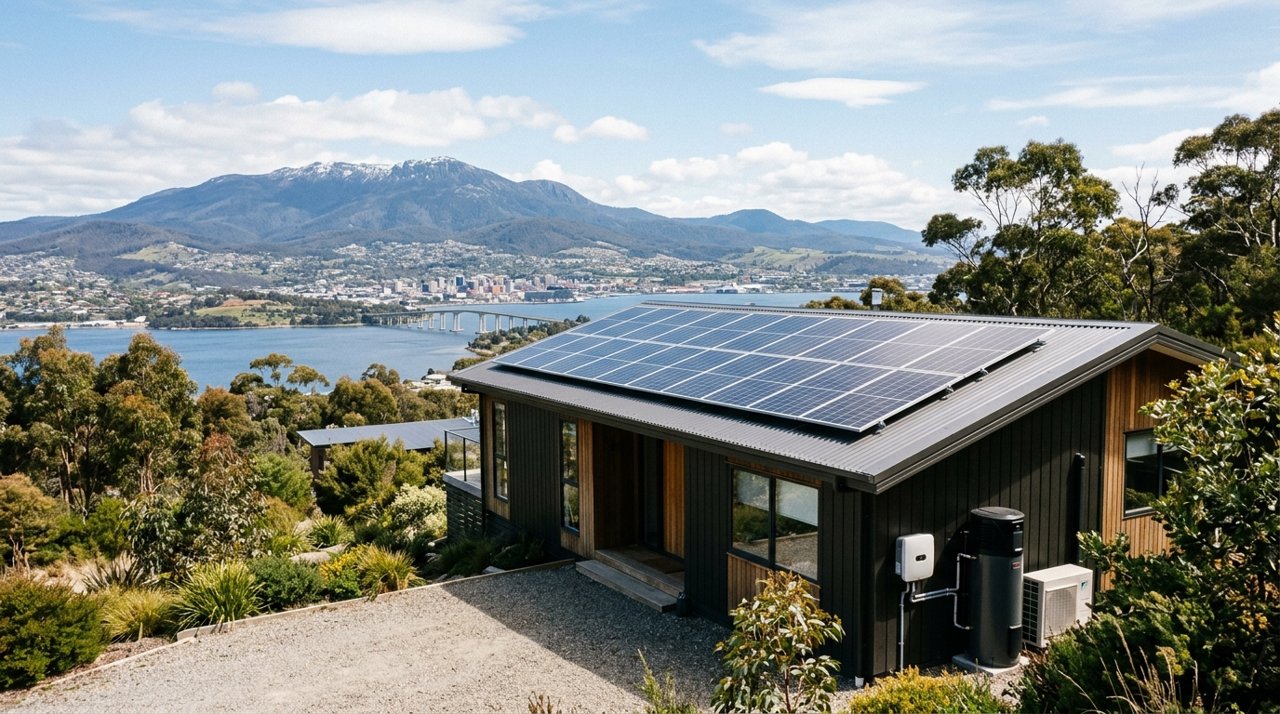
Living in Tassie, we’re lucky to have a hydro-powered grid. But with electricity prices always seeming to go one way (up!), many of us are looking for ways to get control over our power bills. Solar panels are a fantastic way to do that, but the game has changed. It’s no longer about sending power back to the grid; it’s about using that beautiful, free sunshine yourself.
The key thing to understand is the difference between what you pay for electricity versus what you get paid for the solar you export. With Aurora Energy, you might pay around 25-29 cents for every kilowatt-hour (kWh) you pull from the grid. But for any excess solar you send back, the regulated feed-in tariff is only around 9.3 cents per kWh.
That gap tells you everything: the real savings from solar in Tasmania come from self-consumption. You want to use your own solar power during the day to run your home, effectively saving you from buying expensive grid power. Exporting it is just a small bonus.
The Big Three: Your Home’s Hungriest Appliances
If you want to maximise your solar self-consumption, you need to know where your power is going. For most homes, the biggest energy users are heating, hot water, and, increasingly, electric vehicles.
- Heating and Cooling: Many Tasmanian homes still rely on wood heaters or older, inefficient electric heaters. A modern reverse-cycle air conditioner (often called a heat pump) is incredibly efficient for both heating and cooling. Running it during the day on your own solar power is one of the smartest energy moves you can make.
- Hot Water: That old electric hot water cylinder is likely your home’s biggest single power user. It just sits there, burning through expensive grid power day and night. A heat pump hot water system is the modern replacement. It works like a fridge in reverse, pulling warmth from the air to heat your water, and uses about 70% less energy than a traditional electric tank. Set its timer to run in the middle of the day, and you’ll get free hot water from the sun.
- Electric Vehicles (EVs): Even if you don’t have an EV now, you probably will in the next 5-10 years. Charging a car uses a lot of electricity, and doing it from your own rooftop instead of the grid will save you thousands over the life of the car.
Switching these three things to efficient electric versions, powered by your own solar, is the path to true energy independence and a tiny power bill. This is what people mean when they talk about “electrifying your home.”
Sizing Your Solar System for the Future
Not long ago, a 6.6kW solar system was the standard. It was a good size for offsetting some of your daytime power use. But if you’re planning to electrify your home with heat pumps and an EV, a 6.6kW system will be too small very quickly.
Today, a ~13kW solar system is the smart, future-proof choice for a typical Tasmanian household. This usually involves installing around 13kW of panels, paired with a 10kW inverter. This gives you plenty of power to run your home during the day, charge a hot water system, and top up an EV, all before you need to draw from the grid.
Thankfully, TasNetworks rules allow for a 10kW inverter on a standard single-phase power connection, which most Tasmanian homes have. This means you can install a large, future-ready system without the extra cost and hassle of upgrading to three-phase power.
The upfront cost of a system is also reduced by the federal government’s Small-scale Renewable Energy Scheme (SRES). This provides a point-of-sale discount based on the size of your system and your location. Tasmania is in STC Zone 4, which provides a healthy rebate that takes a significant chunk off the final price.
For a very low-energy user with no plans to get an EV or switch to heat pumps, a smaller system might still be suitable. But for most, thinking bigger is the smarter long-term financial decision.
What About Batteries?
A solar battery lets you store your excess solar power generated during the day and use it at night. This is the final piece of the puzzle for maximising self-consumption and minimising what you buy from the grid.
Let’s be upfront: the payback period for a battery is longer than for solar panels alone. While a well-sized solar system can often pay for itself in 4-6 years in Tasmania, adding a battery can extend that payback to around 7-12 years.
However, a battery gives you more than just financial returns. It provides backup power during blackouts—a common occurrence in parts of Tassie—and gives you ultimate control over your energy. The federal government’s Cheaper Home Batteries program can also help reduce the upfront cost, making the decision a little easier.
A battery isn’t essential from day one. A great strategy is to install a larger, “battery-ready” solar system now. You can enjoy the immediate savings from the panels and get a feel for your energy production and usage. Then, when the time is right for you, you can add a battery to store that excess daytime generation for use overnight.
Putting It All Together: A Practical Plan
So, how do you electrify your home and slash your power bills?
- Plan for the Future: Think about your future energy needs. Will you get an EV? Is your hot water system getting old? Plan for a solar system that can handle these future loads. A ~13kW system with a 10kW inverter is the new default for a reason.
- Switch to Heat Pumps: When your old heater or hot water cylinder dies, replace it with an efficient heat pump model. The energy savings are huge.
- Shift Your Load: Get into the habit of running your big appliances—dishwasher, washing machine, dryer—during the middle of the day when the sun is shining. It’s the easiest way to use your own free power.
- Consider a Battery: Install a solar system that’s ready for a battery. You can add one later when it makes sense for your budget and lifestyle, allowing you to use your solar power 24/7.
The goal is simple: generate your own clean energy and use it yourself. By matching a generously sized solar system with modern, efficient electric appliances, you can protect yourself from rising electricity prices and create a more sustainable and comfortable Tasmanian home.
This guide was written by the local team at Solar Generation Tasmania. We’re always happy to help answer questions from our fellow Tasmanians.
#solargentas #solargen #solargenerationtasmania
Published by Solar Generation Tasmania. General information current as at publication — rebates, tariffs and prices change, so confirm current figures before deciding.
Thinking about solar for your place?
Tell us a little about your home and a local Tasmanian installer will put together a free, no-obligation assessment — system, battery and the rebates you qualify for.
- Honest advice for Tasmanian conditions (Zone 4 sun, hydro grid)
- We apply every rebate you’re eligible for
- Local installers — not a mainland call centre
- SAA-accredited, with degree-qualified owners and 10+ years in tech & solar