
← Blog · 24 July 2026
How Much Do Solar Panels Cost in Tasmania After the STC Rebate? — A 2026 Guide
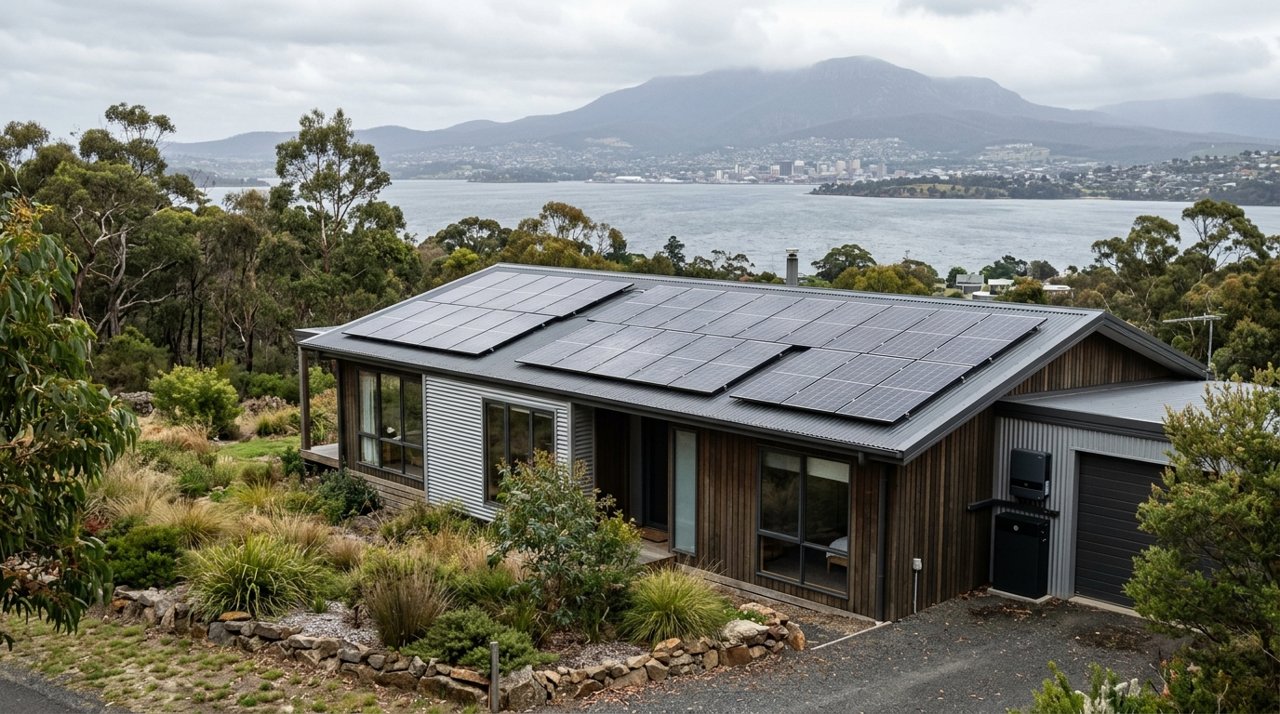
For a typical Tasmanian household, a quality 6.6kW solar system installed in 2026 may cost between $5,500 and $8,500 after the federal STC rebate is applied. A larger, more future-proof 13kW system could range from $11,000 to $16,000. These prices are upfront discounts; you don’t have to claim the rebate yourself, as the installer handles it.
The key saving comes from the federal Small-scale Renewable Energy Scheme (SRES), which generates Small-scale Technology Certificates (STCs). Tasmania is in STC Zone 4, which means it receives a slightly lower rebate than sunnier mainland locations. The total discount depends on the system size, your location, and the market value of STCs when your system is installed. This rebate reduces each year and is scheduled to be phased out by 2030.
What size solar system is right for my home?
For most Tasmanian homes planning to electrify in the future—by adding an electric vehicle (EV), heat pump hot water, or induction cooking—a larger system of around 13kW is now the smart default. This usually involves installing about 13kW of panels with a 10kW inverter, which is the maximum single-phase inverter size TasNetworks generally allows without requiring a costly three-phase upgrade.
However, a smaller system may be more suitable if your electricity usage is very low and you have no plans to electrify.
- Small System (e.g., 6.6kW): Best for lower-energy-use households (1-3 people) with modest daytime power needs. It’s a popular size that has historically offered a good balance of cost and generation.
- Large System (e.g., 13kW): Ideal for larger families, homes with high consumption (pools, home offices), and those planning for future electrical appliances like EVs. This size helps maximise self-consumption and prepares your home for a fully electric future.
The best approach is to review your recent power bills. If your annual usage is over 10,000 kWh, a 13kW system is worth serious consideration.
How does the solar feed-in tariff work in Tasmania?
When your solar panels produce more electricity than your home is using, the excess power is sent back to the grid. Your electricity retailer, most commonly Aurora Energy, pays you a credit for this exported energy. This is known as a feed-in tariff (FiT).
From 1 July 2026, the regulated minimum feed-in tariff in Tasmania will increase to 9.276 cents per kilowatt-hour (c/kWh). While this is one of Australia’s more reasonable feed-in tariffs, it’s still much lower than the price you pay to import electricity from the grid, which is roughly 28-30 c/kWh.
This price difference is crucial. The real value of solar in Tasmania comes from self-consumption—using the solar power yourself during the day to avoid buying expensive grid electricity. Exporting power is a secondary benefit.
Is a solar battery worth it in Tasmania in 2026?
Adding a battery can be a great way to increase your energy independence and protect against blackouts, but the financial payback is slower in Tasmania compared to mainland states. A solar-only system might pay for itself in roughly 4-6 years, while adding a battery could extend that to 7-12 years.
The main financial benefit of a battery is storing your cheap, self-generated solar power from the daytime to use during the expensive evening peak, instead of exporting it for a modest feed-in tariff.
The new federal Cheaper Home Batteries Program, which began on 1 July 2025, can significantly reduce the upfront cost. For eligible systems, it may provide a discount of around 30% on the battery cost. The program is tiered:
- The full support rate applies to the first 14kWh of usable battery capacity.
- A reduced rate of 60% applies for capacity between 14kWh and 28kWh.
- A further reduced rate of 15% applies for capacity between 28kWh and 50kWh.
It’s important to note there are no separate Tasmanian state government battery rebates. Also, unlike on the mainland, opportunities to earn income from your battery by participating in Virtual Power Plants (VPPs) are not really available in Tasmania’s hydro-dominated grid. The value is in self-sufficiency and backup power.
What are the common gotchas or things to watch out for?
Getting solar is a straightforward process, but a few details can trip people up:
- System Sizing vs. Inverter Limits: TasNetworks allows up to a 10kW inverter on a standard single-phase connection. You can “oversize” your panel array by up to 133% of the inverter’s capacity. This means you can install around 13.3kW of panels on a 10kW inverter, which is a very effective strategy for maximising generation throughout the day, especially in Tasmania’s less sunny conditions.
- Self-Consumption is Key: Don’t oversize your system based on the idea of making money from exports. The savings are in using the power yourself. Try to run high-demand appliances like your washing machine, dishwasher, and heat pump during the middle of the day.
- Shading: Even partial shading on one panel can significantly reduce the output of your whole system if you have a standard “string” inverter. If you have unavoidable shading from trees or a neighbouring property, consider microinverters or power optimisers.
- Installer Quality: Your system will only perform as well as it’s installed. Ensure your installer is accredited by Solar Accreditation Australia (SAA) and uses products approved by the Clean Energy Council (CEC).
Ultimately, going solar is a significant investment that can deliver substantial savings on your power bills for decades. The key is to choose a system size that matches not just your current needs, but your future ones as well.
This guide was written by the local team at Solar Generation Tasmania to help our fellow Tasmanians make informed energy decisions.
#solargentas #solargen #solargenerationtasmania
Published by Solar Generation Tasmania. General information current as at publication — rebates, tariffs and prices change, so confirm current figures before deciding.
Thinking about solar for your place?
Tell us a little about your home and a local Tasmanian installer will put together a free, no-obligation assessment — system, battery and the rebates you qualify for.
- Honest advice for Tasmanian conditions (Zone 4 sun, hydro grid)
- We apply every rebate you’re eligible for
- Local installers — not a mainland call centre
- SAA-accredited, with degree-qualified owners and 10+ years in tech & solar