
← Blog · 10 July 2026
Hybrid vs Fully Off-Grid Solar in Tasmania: Which Makes Sense?
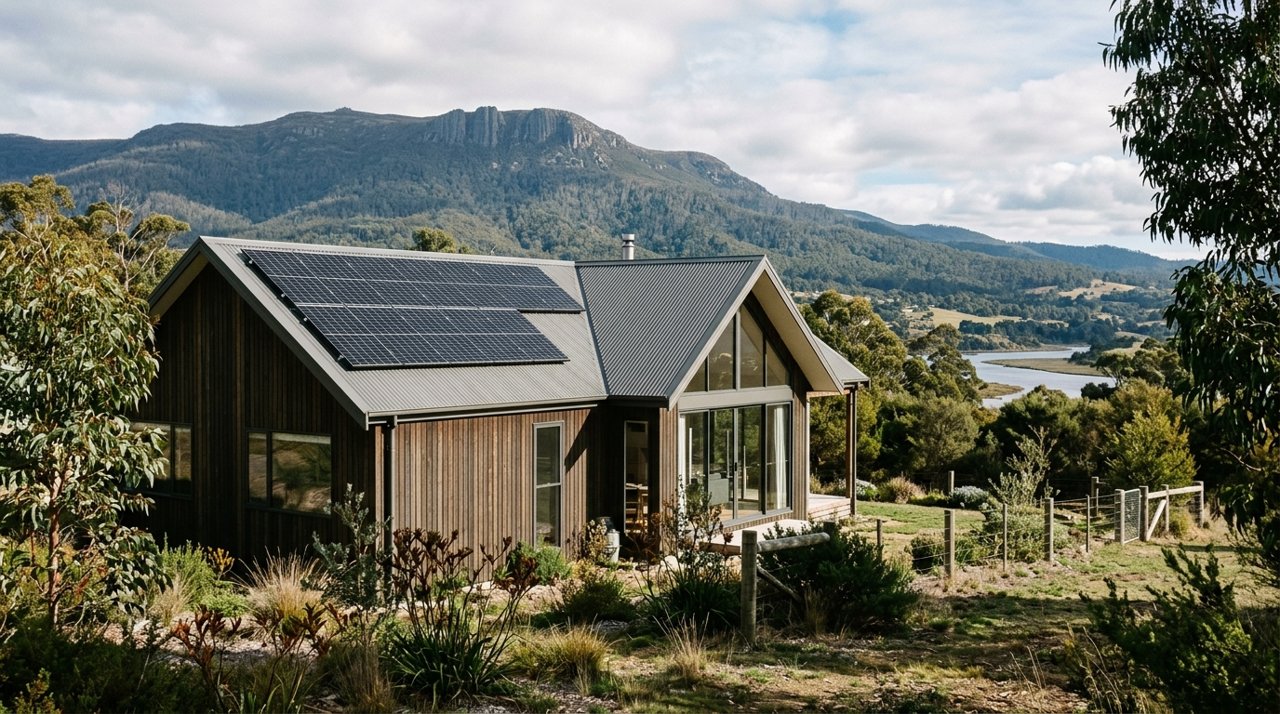
For most Tasmanian homes connected to the grid, a hybrid solar system is the most practical and cost-effective choice. A hybrid system uses solar panels, a battery, and the grid, giving you the best of all worlds: lower power bills from using your own solar, battery backup for outages, and the reliability of the grid when you need it. A fully off-grid system, which has no connection to the grid, is only suitable for remote properties where a grid connection is unavailable or extremely expensive to install.
Hybrid systems are designed to maximise the use of your own solar power. During the day, your panels power your home, with any excess energy charging your battery. In the evening, you use the stored battery power. If the battery runs low, you automatically and seamlessly draw power from the grid. This setup is perfect for reducing reliance on your energy retailer without the significant expense and lifestyle compromises of going completely off-grid.
How does a hybrid solar system actually work?
A hybrid solar system intelligently manages power from three sources: your solar panels, a home battery, and the electricity grid. It prioritises using the free energy from your panels first. Any extra solar power not used by your appliances is then stored in your battery for later use, typically at night. Only when your panels aren’t generating and your battery is depleted will the system draw power from the grid, ensuring you always have electricity.
This process is managed automatically by a smart hybrid inverter. The key benefit is making the most of your solar generation to cut your power bills. Since buying power from a retailer like Aurora Energy costs roughly 28-30 c/kWh and you only get about 9.276 c/kWh for selling it back, using your own stored solar power provides significantly more value.
Here’s a simple breakdown of the energy flow:
- Sunny Day: Solar panels power your home directly. Excess power charges the battery. If the battery is full, surplus power can be exported to the grid for a feed-in tariff credit.
- Cloudy Day: Solar panels provide what they can. The battery or the grid seamlessly tops up any shortfall.
- Evening/Night: The system draws power from the charged battery.
- Blackout: If you have backup functionality enabled, the system can disconnect from the grid and use the battery to power essential circuits in your home.
Is going fully off-grid in Tasmania a realistic option?
Going fully off-grid is a major undertaking that is not practical for the vast majority of Tasmanian households. It means completely disconnecting from TasNetworks’ poles and wires and being 100% self-sufficient for your electricity. This requires a much larger and more expensive solar and battery system to ensure you have enough power through the least sunny parts of winter, plus a reliable backup generator for emergencies.
While the idea of no more power bills is appealing, the upfront cost is significantly higher than for a hybrid system. You must also carefully manage your energy consumption, especially during long stretches of cloudy weather, as there is no grid to fall back on. For these reasons, off-grid living is typically reserved for rural or remote properties where the cost of connecting to the grid is prohibitively high.
| Feature | Hybrid Solar System | Fully Off-Grid System |
|---|---|---|
| Grid Connection | Yes, remains connected. | No, completely disconnected. |
| Upfront Cost | Moderate to high. | Very high. |
| System Size | Sized to offset usage. | Must be oversized for worst-case weather. |
| Reliability | Very high (grid as backup). | Dependent on system design and weather. |
| Best For | Most urban and regional homes. | Remote properties with no grid access. |
| Maintenance | Low. | Higher (includes generator servicing). |
What size solar system should I get for my Tasmanian home?
For a typical Tasmanian household looking to future-proof for an electric vehicle, heat pump hot water, and other electric appliances, a system with around 13kW of panels paired with a 10kW inverter is now a smart default. This is a step up from the 6.6kW systems that were common in the past. The larger size helps maximise your solar generation, especially during Tasmania’s less sunny months, and provides enough excess energy to charge a battery.
TasNetworks rules are quite favourable, allowing up to a 10kW inverter on a standard single-phase connection, which most homes have. This means you can install a powerful system without needing an expensive three-phase upgrade.
However, not every home needs a large system. If you have very low electricity usage and no plans to electrify your home or add a battery, a smaller system of around 6.6kW may be more suitable and cost-effective.
Does a battery make financial sense in Tasmania?
A home battery adds significant value through self-consumption and blackout protection, but the financial payback is slower in Tasmania compared to mainland states. This is because our electricity prices are relatively low and our feed-in tariff is fair. The main financial benefit of a battery is storing your excess solar energy (worth 28-30 c/kWh when you use it) instead of exporting it for a modest 9.276 c/kWh credit.
With a typical solar-only system having a payback period of roughly 4-6 years, adding a battery can extend this to around 7-12 years.
The new federal Cheaper Home Batteries Program, which started on 1 July 2025, can help improve these figures. If eligible, you could receive a discount of around 30% on the upfront cost of a new battery, which is applied by your installer. It’s important to note there are no separate Tasmanian state government battery rebates. Also, opportunities to earn extra income from your battery by participating in a Virtual Power Plant (VPP) are not widely available for residential customers in Tasmania’s hydro-dominated grid.
What government rebates are available for solar in Tasmania?
Tasmanian homeowners can access the federal Small-scale Renewable Energy Scheme (SRES) to reduce the upfront cost of their solar panel system. This isn’t a cash rebate but an upfront discount provided by your installer. The amount is based on the size of your system and your location, creating what are called Small-scale Technology Certificates (STCs).
Tasmania is in STC Zone 4, which receives a slightly lower discount than sunnier parts of Australia. The value of STCs also gradually reduces each year, so the discount will be smaller the longer you wait to install. To be eligible, your system must be installed by a professional accredited by Solar Accreditation Australia (SAA) and use approved panels and inverters.
Key Takeaways for Tasmanian Homeowners
For the vast majority of homes in Hobart, Launceston, and regional towns, a grid-connected hybrid solar system is the clear winner. It provides the ideal balance of energy savings, blackout security, and value for money. Going fully off-grid is a specialist solution for remote properties where the grid isn’t an option.
Focus on installing a generously sized solar panel system (10-13kW is a good target for an electrifying home) to maximise your energy production. This is the engine of your savings. A battery is a valuable addition for maximising self-consumption and providing backup, and while the federal discount helps, view it as a long-term investment in energy security rather than a quick money-saver.
This guide was written by the team at Solar Generation Tasmania. We’re locals who are passionate about helping Tasmanians understand their energy options.
#solargentas #solargen #solargenerationtasmania
Published by Solar Generation Tasmania. General information current as at publication — rebates, tariffs and prices change, so confirm current figures before deciding.
Thinking about solar for your place?
Tell us a little about your home and a local Tasmanian installer will put together a free, no-obligation assessment — system, battery and the rebates you qualify for.
- Honest advice for Tasmanian conditions (Zone 4 sun, hydro grid)
- We apply every rebate you’re eligible for
- Local installers — not a mainland call centre
- SAA-accredited, with degree-qualified owners and 10+ years in tech & solar