
← Blog · 17 August 2026
Is Solar Worth It in Tasmania in 2026? for Tasmanian Households
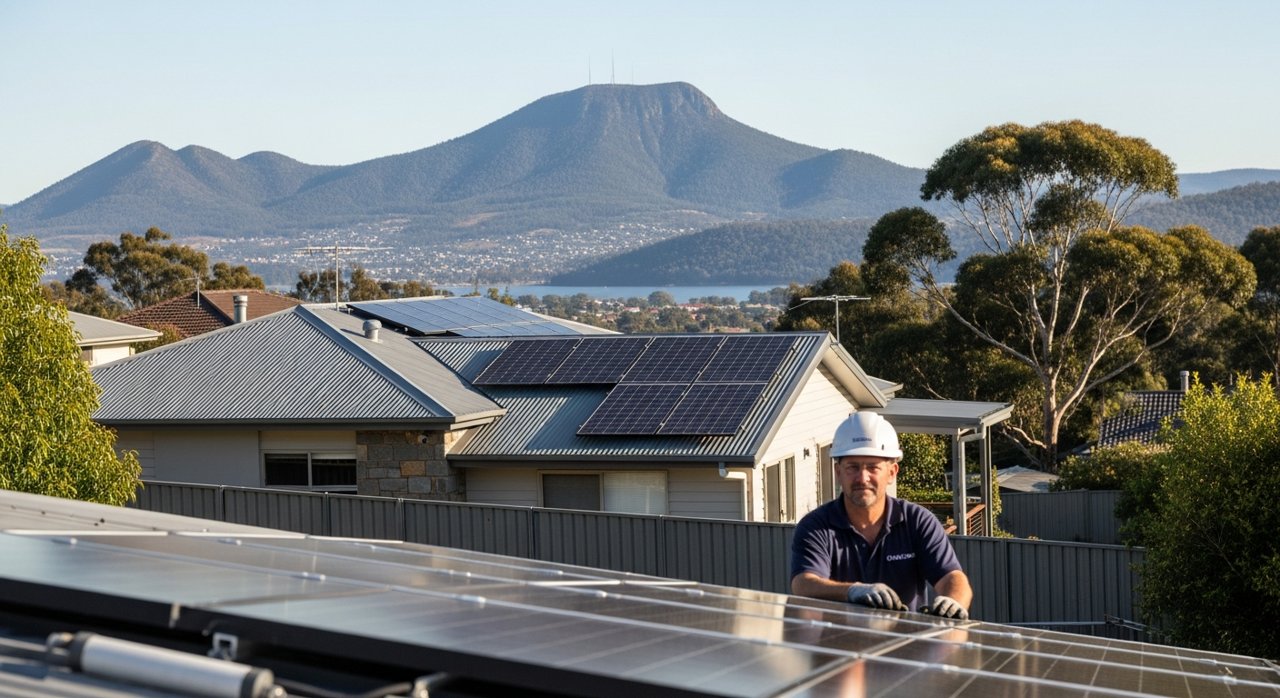
For most Tasmanian households, the biggest savings from solar come from using the power you generate yourself, not from selling it back to the grid. This is called self-consumption. When you use your own solar power, you avoid buying electricity from a retailer like Aurora Energy at the standard price of roughly 28-30 cents per kilowatt-hour (c/kWh). In contrast, the regulated feed-in tariff you receive for exporting surplus power is set at a more modest 9.276 c/kWh from 1 July 2026. Every kilowatt-hour of solar you use at home is a kilowatt-hour you don’t have to buy, making self-consumption around three times more valuable than exporting.
While specific savings depend on your energy usage patterns, system size, and how much power you use during the day, a well-sized system can significantly reduce your quarterly power bills. The goal is to shift as much of your energy-hungry appliance usage—like washing machines, dishwashers, and hot water systems—to the middle of the day to soak up that free sunshine.
What size solar system do I need in 2026?
The old standard 6.6kW system is no longer the default choice for Tasmanian homes looking to the future. With households increasingly adopting electric vehicles (EVs), heat pump hot water systems, and induction cooktops, a larger system is now the smarter investment. A system of around 13kW of panels paired with a 10kW inverter is becoming the new standard. This approach, known as inverter oversizing, allows you to generate more power throughout the day, especially in the morning and afternoon, to cover your future energy needs.
The good news is that most Tasmanian homes can install a system this size without needing an expensive three-phase power upgrade. TasNetworks, the state’s grid operator, generally permits a 10kW inverter on a standard single-phase connection.
A quick guide to system sizing:
- Low-use homes: If you have low electricity bills and no plans for major electric upgrades, a smaller 5-6.6kW system might still be a good fit.
- Average to high-use homes: For a typical family home, especially one planning to add an EV or a heat pump, a 10-13kW system provides a strong, future-proof platform.
- Roof space: A modern 6.6kW system needs about 30 square metres of roof space, so a 13kW system would need roughly double that. Your installer can confirm what fits.
What government rebates can I get?
In Tasmania, the main financial incentive is the federal Small-scale Renewable Energy Scheme (SRES), often called the “solar rebate.” This isn’t a cash-back offer but an upfront discount on the cost of your system. The scheme provides Small-scale Technology Certificates (STCs) based on your system’s size and location. Tasmania is in STC Zone 4, which means it receives a slightly lower discount than sunnier mainland locations, but it still significantly reduces the initial cost. Your solar installer will almost always handle the STC process for you and include the discount directly in your quote.
It’s important to know that there are no separate Tasmanian state government rebates for solar panels. The federal STC scheme is the key program available to reduce the upfront cost.
Are solar batteries worth it in Tasmania?
This is a common question, and the honest answer for many Tasmanians in 2026 is: maybe not yet, unless you have specific needs. While a battery allows you to store your excess daytime solar energy for use at night, Tasmania’s relatively low electricity prices and fair feed-in tariff mean the payback period for a battery is often longer here than on the mainland, typically in the range of 7-12 years.
However, the new federal Cheaper Home Batteries Program, which started on 1 July 2025, makes the decision more interesting. This program can provide an upfront discount of around 30% on the cost of an eligible battery when it’s installed with solar panels.
| Why a Battery Might Be Worth It For You | Why You Might Wait |
|---|---|
| You want backup power during blackouts. | Your primary goal is the fastest possible payback. |
| You want to maximise your energy independence. | You don’t have high overnight electricity usage. |
| You are on a wholesale spot-price electricity plan. | You can easily shift most of your power use to daytime hours. |
| You want to be an early adopter of new technology. | You are waiting for battery prices to fall further. |
For most households on a standard Aurora Energy tariff, a battery’s main value is in maximising self-consumption and providing backup power. There are currently no major Virtual Power Plant (VPP) programs offered by retailers in Tasmania that would pay you to use your battery to support the grid. However, for those on specialised wholesale electricity plans, a battery can be automated to charge when grid prices are very low or even negative, and discharge to power your home when prices are high, creating another avenue for savings.
How does the solar installation process work?
Getting solar installed is a straightforward process, with your chosen installer handling most of the technical steps and paperwork.
- Quote and System Design: After an initial consultation, you’ll receive a quote for a system designed to fit your roof and meet your energy needs.
- Grid Connection Approval: Before installation, your installer must submit an application to TasNetworks to get approval to connect the system to the grid.
- Installation: Once approved, the installation team will mount the panels on your roof and install the inverter, which is usually done in a day or two.
- Inspection and Metering: After the installation, the system is inspected, and your installer submits the required paperwork. Your electricity retailer (usually Aurora Energy) will then arrange for your meter to be replaced or reconfigured to measure both the power you import and the solar you export.
- System Activation: You can only turn your system on after the new meter is installed. It’s tempting to switch it on right away, but doing so before the meter change can lead to incorrect billing.
The most common delay is often the meter changeover, which can take a few weeks after the installation is complete.
The Takeaway
For the majority of Tasmanian homeowners, installing solar panels in 2026 is a smart financial decision that offers a solid return on investment, typically paying for itself in around 4-6 years. The key to maximising your savings is to use as much of your own solar power as possible. By choosing a larger, future-proof system size (around 10-13kW), you set your home up for a future of electric vehicles and appliances, all powered by the sun. While a battery is a more complex decision with a longer payback period, the new federal rebate makes it a more attractive option, especially for those who value energy independence and backup power.
This guide was written by the team at Solar Generation Tasmania to help our fellow Tasmanians make informed decisions about their energy future.
#solargentas #solargen #solargenerationtasmania
Published by Solar Generation Tasmania. General information current as at publication — rebates, tariffs and prices change, so confirm current figures before deciding.
Thinking about solar for your place?
Tell us a little about your home and a local Tasmanian installer will put together a free, no-obligation assessment — system, battery and the rebates you qualify for.
- Honest advice for Tasmanian conditions (Zone 4 sun, hydro grid)
- We apply every rebate you’re eligible for
- Local installers — not a mainland call centre
- SAA-accredited, with degree-qualified owners and 10+ years in tech & solar