
← Blog · 3 July 2026
Microinverters vs String Inverters for Tasmanian Roofs
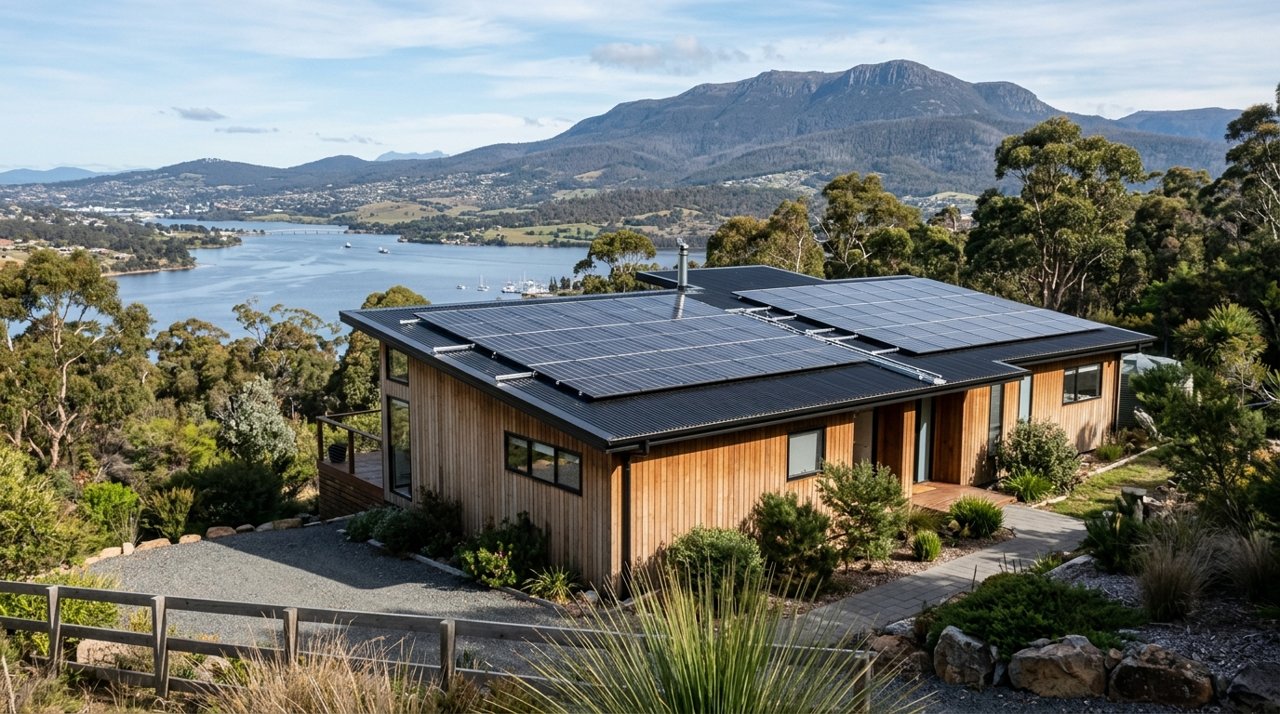
Here in Tasmania, making the switch to solar is a smart move for many households. With our rising electricity costs, harnessing the sun’s power is about becoming more self-sufficient and slashing your power bills. But once you start looking into it, you’ll quickly find it’s not just about the panels. A key decision you’ll face is choosing the right type of inverter: a ‘string’ inverter or ‘microinverters’.
This choice can have a big impact on how much power your system generates, its cost, and how it performs for years to come. Let’s break down the options in a straightforward way, specifically for Tasmanian homes.
What Does a Solar Inverter Actually Do?
Think of an inverter as the brain of your solar power system. The solar panels on your roof generate Direct Current (DC) electricity. But your home, and the electricity grid, run on Alternating Current (AC) electricity. The inverter’s main job is to convert the DC power from your panels into usable AC power for your appliances.
Without an inverter, the power from your panels is useless. But not all inverters work the same way, which brings us to the big question: string or micro?
The Tried and Tested: String Inverters
A string inverter is the traditional, and still most common, type of inverter used in residential solar setups across Tasmania.
Here’s how it works: your solar panels are linked together in a series, creating a ‘string’. The power from this entire string of panels runs down to a single, wall-mounted box (the string inverter), which is usually installed in your garage or on a shaded outside wall. This one box then converts all the DC power from the string into AC power for your home.
Pros of String Inverters:
- Lower Upfront Cost: This is the main advantage. String inverter systems are generally more affordable to install because you’re only buying one central inverter.
- Simpler Technology: The technology is mature and well-understood by electricians. Fault-finding is often simpler as there’s only one main unit to check.
- Good for Simple Roofs: If you have a large, simple, north-facing roof with no shade, a string inverter is a very effective and economical choice.
Cons of String Inverters:
- The “Christmas Lights” Effect: Because the panels are linked in a string, if one panel’s performance drops, it can drag down the performance of the entire string. This is a big issue in Tassie. If a tree branch, a chimney, or even a passing cloud shades just one panel, the output of all the panels in that string is reduced to the level of the weakest performer.
- Single Point of Failure: If your central string inverter fails, your entire solar system stops producing power until it’s repaired or replaced.
- Less Flexible for Complex Roofs: If your roof has multiple sections facing different directions (e.g., north and west), you’ll need a more complex string inverter with multiple inputs (called MPPTs) or even multiple inverters, which can add cost.
The Panel-Level Performer: Microinverters
Microinverters are a newer technology that takes a completely different approach. Instead of one central inverter, a small microinverter is installed directly underneath each individual solar panel on your roof.
Each microinverter converts the DC power from its single panel into AC power right there on the spot. The AC power from all the panels is then combined and sent to your switchboard.
Pros of Microinverters:
- Maximised Power Generation: This is their killer feature. Because each panel operates independently, the “Christmas lights” effect is eliminated. If one panel is shaded, or even gets covered in bird droppings, it doesn’t affect the performance of any other panels. This is a huge advantage for Tasmanian homes with unavoidable shading from trees, hills, or complex rooflines.
- Excellent for Complex Roofs: You can install panels on different roof sections, facing various directions and angles, and each will produce power to its full potential.
- Panel-Level Monitoring: You can see the performance of every single panel on your computer or smartphone. This makes it easy to spot if a specific panel isn’t working correctly.
- No Single Point of Failure: If one microinverter fails, the other panels keep generating power. You only lose the output of that one panel.
- Easier to Expand: Adding more panels to your system later is much simpler. You just add a new panel with its own microinverter.
Cons of Microinverters:
- Higher Upfront Cost: The main drawback is the price. Having an inverter for every panel means more hardware, so the initial installation cost is typically higher than for a string inverter system.
- More Complex Installation: While not a huge issue for a qualified installer, there are more components to install on the roof.
Which is Right for Your Tasmanian Home?
The right choice really depends on your specific property and priorities.
In Tasmania, the goal is to maximise self-consumption of your solar power. With a modest feed-in tariff of around 9.3 cents per kilowatt-hour (c/kWh) for power you export, compared to buying it from the grid at roughly 25-29 c/kWh, every kilowatt-hour you can generate and use yourself saves you serious money.
Here’s a simple guide:
- Choose a String Inverter if: You have a simple, unshaded, north-facing roof. Your budget is the primary concern, and you want the most cost-effective system for a straightforward installation.
- Choose Microinverters if: Your roof has any shading issues, even for part of the day. You have a complex roof with different angles or orientations. You want the highest possible energy yield from your system and the ability to monitor each panel. You plan to expand your system in the future.
For many Tasmanian homes, which often have trees, nearby hills, or rooflines that aren’t perfectly simple, the extra energy a microinverter system can harvest from morning till late afternoon often justifies the higher initial cost. Over the 4-6 year typical payback period for a solar system, that extra generation really adds up.
A Note on System Size
Whether you choose string or microinverters, think about future-proofing your system size. The old 6.6kW system is often not enough anymore. As we move to electrify our homes with EV chargers, heat pump hot water, and induction cooktops, our energy needs are growing.
A larger system, like 13kW of panels on a 10kW inverter (which is the maximum single-phase size TasNetworks allows for most homes), is a smart investment for the future. Both string and microinverter systems can be built to this scale.
The Final Takeaway
The “string vs micro” debate doesn’t have one right answer for everyone. The best choice is the one that fits your roof, your budget, and your energy goals. A simple, unshaded roof can perform brilliantly with a quality string inverter. However, for the many Tasmanian properties with even a little bit of shade or a less-than-simple roof, microinverters will almost certainly generate more power over the system’s lifetime, leading to greater savings and a better return on your investment.
This guide was written by the Tasmanian solar team at Solar Generation Tasmania. We’re always happy to help answer questions from our fellow Tasmanians.
#solargentas #solargen #solargenerationtasmania
Published by Solar Generation Tasmania. General information current as at publication — rebates, tariffs and prices change, so confirm current figures before deciding.
Thinking about solar for your place?
Tell us a little about your home and a local Tasmanian installer will put together a free, no-obligation assessment — system, battery and the rebates you qualify for.
- Honest advice for Tasmanian conditions (Zone 4 sun, hydro grid)
- We apply every rebate you’re eligible for
- Local installers — not a mainland call centre
- SAA-accredited, with degree-qualified owners and 10+ years in tech & solar