
← Blog · 16 August 2026
National Battery Boom Hits 500,000 Milestone as Tasmanian Power and Solar Export Prices Rise
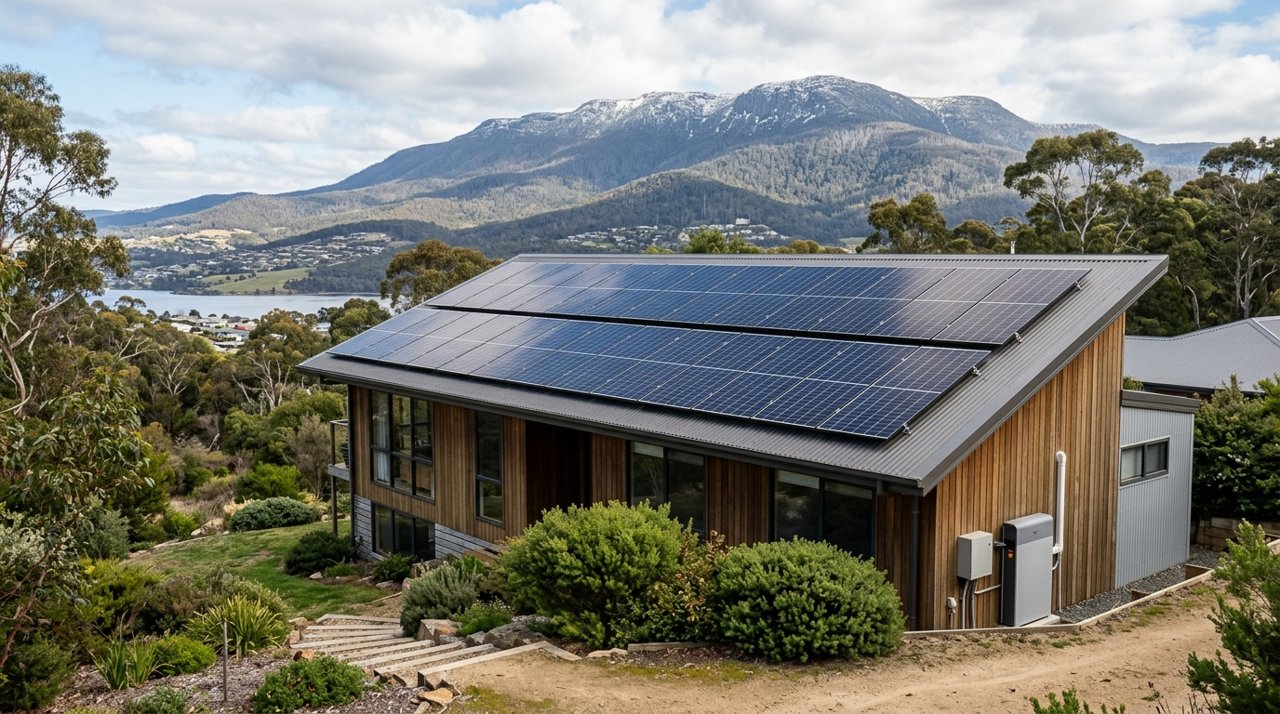
A major national milestone for home energy storage was announced in mid-August, while Tasmanians are navigating new electricity and solar feed-in prices that took effect at the start of July. These developments, combined with a key expansion of the federal solar rebate scheme for businesses, paint a dynamic picture for renewable energy in the state.
National Battery Program Reaches Half a Million Installations
On August 14, the Prime Minister and the Minister for Climate Change and Energy announced that over 500,000 home batteries have now been installed across the country under the federal Cheaper Home Batteries Program. This program, which provides an upfront discount on the cost of a home battery, is delivered through the Small-scale Renewable Energy Scheme (SRES). The rapid uptake, with more than three-quarters of installations occurring in outer suburban and regional areas, signals that battery storage is becoming a mainstream addition to rooftop solar.
For a Tasmanian homeowner, this milestone confirms the federal rebate remains a powerful incentive. The program provides a discount equivalent to roughly 30% of the battery cost, applied by the installer at the point of sale. It’s important to note that the structure of this rebate was changed on May 1, 2026, to a tiered system, as confirmed by the Clean Energy Regulator. Homeowners now receive the full rebate factor on the first 14kWh of usable battery capacity, with reduced rates for capacity beyond that, up to a 50kWh cap. As of August 2026, Tasmania has no additional state-level battery subsidy, meaning the federal program is the only rebate available.
Tasmanian Electricity Prices and Solar Feed-in Tariffs Increase
Closer to home, new regulated prices from Aurora Energy came into effect on July 1. The Tasmanian Economic Regulator announced in late June that it had approved an average 4.23% increase for residential and small business standing offer electricity tariffs. For a typical household, this equates to an increase of about $108 per year. The regulator stated the rise was primarily driven by higher network costs for TasNetworks.
In the same announcement, the regulator confirmed a positive change for solar owners. The minimum solar feed-in tariff—the rate paid for surplus energy exported to the grid—rose by 5.6% to 9.276 cents per kilowatt-hour (kWh). While any increase is welcome, the rising cost of buying electricity from the grid means the financial benefit of “self-consumption” (using your own solar power directly) has also grown, making it significantly more valuable than exporting it.
Federal Solar Rebate Scheme Expanded for Larger Systems
On August 5, the Australian Government announced a significant expansion of the SRES, the same scheme that underpins the solar and battery rebates. The Clean Energy Regulator confirmed that eligibility for Small-scale Technology Certificates (STCs) will be expanded from 100kW systems to much larger 1MW systems. This change is aimed squarely at boosting solar uptake for businesses, factories, and apartment buildings. While this does not directly alter the rebate for a typical Tasmanian home installation, it signals strong ongoing federal support for the solar industry and the STC mechanism that reduces upfront costs for all solar customers.
Technology Update: N-Type Panels and LFP Batteries Dominate 2026 Market
For those considering a new system, the technology available in mid-2026 has largely standardised around higher-performing options. Industry-wide, panel manufacturing has shifted from older P-type PERC cells to newer N-type TOPCon technology. [cite: 3, 6,TITLE: National Battery Boom Hits 500,000 Milestone as Tasmanian Power and Solar Export Prices Rise
A major national milestone for home energy storage was announced in mid-August, while Tasmanians are navigating new electricity and solar feed-in prices that took effect at the start of July. These developments, combined with a key expansion of the federal solar rebate scheme for businesses, paint a dynamic picture for renewable energy in the state.
National Battery Program Reaches Half a Million Installations
On August 14, the Prime Minister and the Minister for Climate Change and Energy announced that over 500,000 home batteries have now been installed across the country under the federal Cheaper Home Batteries Program. [cite: 14, 16] This program, which provides an upfront discount on the cost of a home battery, is delivered through the Small-scale Renewable Energy Scheme (SRES). The rapid uptake, with more than three-quarters of installations occurring in outer suburban and regional areas, signals that battery storage is becoming a mainstream addition to rooftop solar. [cite: 14]
For a Tasmanian homeowner, this milestone confirms the federal rebate remains a powerful incentive. The program provides a discount equivalent to roughly 30% of the battery cost, applied by the installer at the point of sale. [cite: 12, 18] It’s important to note that the structure of this rebate was changed on May 1, 2026, to a tiered system, as confirmed by the Clean Energy Regulator. [cite: 20] Homeowners now receive the full rebate factor on the first 14kWh of usable battery capacity, with reduced rates for capacity beyond that, up to a 50kWh cap. [cite: 10, 12, 25] As of August 2026, Tasmania has no additional state-level battery subsidy, meaning the federal program is the only rebate available. [cite: 35]
Tasmanian Electricity Prices and Solar Feed-in Tariffs Increase
Closer to home, new regulated prices from Aurora Energy came into effect on July 1. The Tasmanian Economic Regulator announced in late June that it had approved an average 4.23% increase for residential and small business standing offer electricity tariffs. [cite: 15, 24, 33] For a typical household, this equates to an increase of about $108 per year. [cite: 15] The regulator stated the rise was primarily driven by higher network costs for TasNetworks. [cite: 15]
In the same announcement, the regulator confirmed a positive change for solar owners. The minimum solar feed-in tariff—the rate paid for surplus energy exported to the grid—rose by 5.6% to 9.276 cents per kilowatt-hour (kWh). [cite: 15, 17, 24, 30] While any increase is welcome, the rising cost of buying electricity from the grid means the financial benefit of “self-consumption” (using your own solar power directly) has also grown, making it significantly more valuable than exporting it.
Federal Solar Rebate Scheme Expanded for Larger Systems
On August 5, the Australian Government announced a significant expansion of the SRES, the same scheme that underpins the solar and battery rebates. The Clean Energy Regulator confirmed that eligibility for Small-scale Technology Certificates (STCs) will be expanded from 100kW systems to much larger 1MW systems. [cite: 9] This change is aimed squarely at boosting solar uptake for businesses, factories, and apartment buildings. [cite: 32, 34] While this does not directly alter the rebate for a typical Tasmanian home installation, it signals strong ongoing federal support for the solar industry and the STC mechanism that reduces upfront costs for all solar customers.
Technology Update: N-Type Panels and LFP Batteries Dominate 2026 Market
For those considering a new system, the technology available in mid-2026 has largely standardised around higher-performing options. Industry-wide, panel manufacturing has shifted from older P-type PERC cells to newer N-type TOPCon technology. [cite: 3, 6,
#solargentas #solargen #solargenerationtasmania
Published by Solar Generation Tasmania. General information current as at publication — rebates, tariffs and prices change, so confirm current figures before deciding.
Thinking about solar for your place?
Tell us a little about your home and a local Tasmanian installer will put together a free, no-obligation assessment — system, battery and the rebates you qualify for.
- Honest advice for Tasmanian conditions (Zone 4 sun, hydro grid)
- We apply every rebate you’re eligible for
- Local installers — not a mainland call centre
- SAA-accredited, with degree-qualified owners and 10+ years in tech & solar