
← Blog · 19 July 2026
Off-Grid vs Grid-Connected Solar in Rural Tasmania
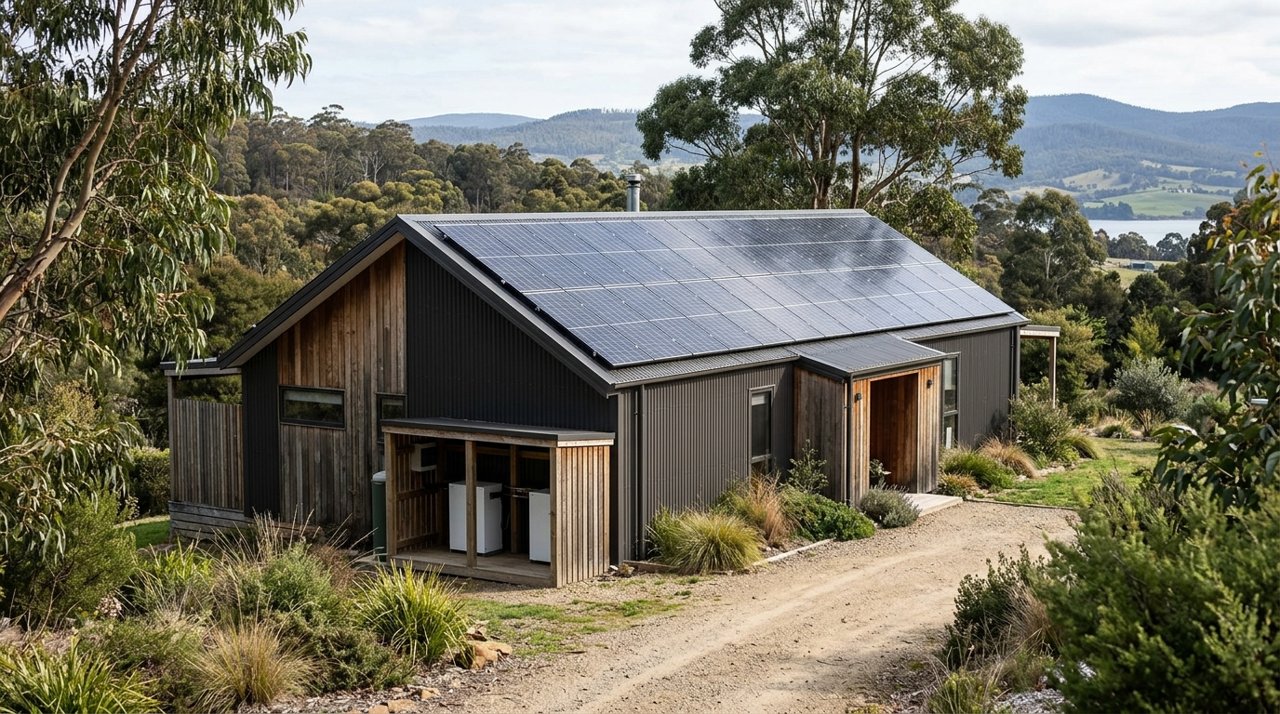
For the vast majority of Tasmanian homes, even in rural areas, staying connected to the grid is the most practical and financially sensible choice. A true off-grid system provides complete independence from blackouts but comes at a very high upfront cost—often three to five times more than a grid-connected system—and requires significant battery storage, a backup generator, and ongoing maintenance.
Going completely off-grid is usually only necessary for remote properties where the cost of connecting to the mains network is prohibitively expensive. For everyone else, a modern grid-connected system, especially one with a battery, offers a fantastic blend of savings, energy security, and future-proofing without the extreme expense and complexity of a full off-grid setup.
How does a grid-connected solar system work in Tassie?
A grid-connected solar system is a simple and effective way to cut your power bills. During the day, your solar panels generate electricity. Your home uses this power first, directly from the panels. If you generate more power than you’re using, the excess is sent back into the electricity grid, and our main retailer, Aurora Energy, gives you a credit for it on your bill.
This credit is called a feed-in tariff, which from 1 July 2026 is regulated at 9.276 cents per kilowatt-hour (c/kWh). However, the power you buy from the grid costs roughly 28-30 c/kWh. This big difference is why the real value is in self-consumption—using as much of your own solar power as possible to avoid buying expensive electricity from the grid.
What size solar system do I actually need?
The old standard 6.6kW system is still a decent choice for households with lower energy use, but for most Tasmanian homes, a larger system is now the smarter, more future-proof option. We recommend considering a system of around 13kW of panels paired with a 10kW inverter. This approach, known as inverter oversizing, is perfectly normal and helps maximise your generation throughout the day.
Why so big? Because the future is electric. Many households will soon have, or already have:
- An electric vehicle (EV)
- A heat pump for hot water
- A reverse cycle air conditioner for heating and cooling
- An induction cooktop
These appliances are fantastic and efficient, but they use a lot of electricity. A larger solar system ensures you can power them with your own free energy from the sun. Thankfully, TasNetworks allows a 10kW inverter on a standard single-phase connection, which most Tasmanian homes have, making this a straightforward upgrade.
Is a solar battery worth it in Tasmania right now?
A battery can be a great addition, but it’s important to be honest about the economics here in Tasmania. Our relatively low electricity prices and fair feed-in tariff mean the payback period for a battery is longer than on the mainland, often somewhere in the 7 to 12-year range.
The main value of a battery in Tassie is two-fold:
- Maximising Self-Consumption: It stores your excess solar power from the daytime so you can use it in the evening, instead of buying power from the grid at a high price.
- Blackout Protection: With the right setup, a battery can keep your essential circuits running during a power outage, which is a huge benefit in many rural areas.
A new federal government incentive, the Cheaper Home Batteries Program, can help with the upfront cost. If you’re eligible, this program may provide a discount of around 30% on an approved battery system when it’s installed with solar. It’s important to note there are no separate Tasmanian state government battery rebates. Also, unlike on the mainland, earning extra income from your battery by joining a Virtual Power Plant (VPP) is not a significant opportunity in Tasmania’s unique hydro-dominated grid.
Grid-Connected vs. Off-Grid: A Quick Comparison
| Feature | Grid-Connected with Battery | Fully Off-Grid |
|---|---|---|
| Upfront Cost | Moderate to High | Very High (often 3-5x more) |
| Power Bills | Drastically reduced or eliminated | Completely eliminated |
| Reliability | Very high, with grid as backup | Depends on system size & weather |
| Blackout Proof? | Yes, for essential circuits | Yes, for the whole house |
| Maintenance | Low (panels & inverter) | Higher (batteries, generator) |
| Best For | Most homes, even rural ones | Very remote or new-build properties |
How do solar rebates work in Tasmania?
The main financial incentive for installing solar panels is the federal Small-scale Renewable Energy Scheme (SRES). This isn’t a cash payment you get later; it works as an upfront discount on the cost of your system.
The scheme provides Small-scale Technology Certificates (STCs) based on your system’s size and location. Tasmania is in STC Zone 4. Your solar installer handles the process of claiming and selling these certificates and simply takes the total value off your final invoice. This federal rebate significantly reduces the initial cost of going solar.
What’s the realistic payback period for solar and batteries?
For a well-designed solar panel system in Tasmania, homeowners can often see a payback period in the range of 4 to 6 years. After that, the electricity your system generates is essentially free for the remaining 20+ year lifespan of the panels.
As mentioned, the payback on the battery portion of a system is longer, typically around 7 to 12 years. The federal battery program helps shorten this, but it remains a long-term investment. The decision to get a battery often comes down to valuing blackout security and energy independence as much as the direct financial return. Of course, any potential payback period depends on your specific energy usage, the final system cost, and future electricity prices.
So, what’s the verdict for my home?
For most rural and regional Tasmanians, a large, grid-connected solar system is the clear winner. It offers the best balance of cost, savings, and reliability. It immediately tackles high power bills by letting you use your own solar energy, which is far cheaper than buying it from the grid.
Starting with a “battery-ready” system is a smart strategy. This means installing a larger solar array and a hybrid inverter now, giving you the option to add a battery later when it makes sense for your family and budget. This approach provides excellent savings today while keeping your options open for complete energy security tomorrow.
This guide was written by the local team at Solar Generation Tasmania. We’re always happy to help our fellow Tasmanians understand their energy options.
#solargentas #solargen #solargenerationtasmania
Published by Solar Generation Tasmania. General information current as at publication — rebates, tariffs and prices change, so confirm current figures before deciding.
Thinking about solar for your place?
Tell us a little about your home and a local Tasmanian installer will put together a free, no-obligation assessment — system, battery and the rebates you qualify for.
- Honest advice for Tasmanian conditions (Zone 4 sun, hydro grid)
- We apply every rebate you’re eligible for
- Local installers — not a mainland call centre
- SAA-accredited, with degree-qualified owners and 10+ years in tech & solar