
← Blog · 6 August 2026
Oversizing Your Array: Why 13kW Beats 6.6kW in Tasmania — A 2026 Guide
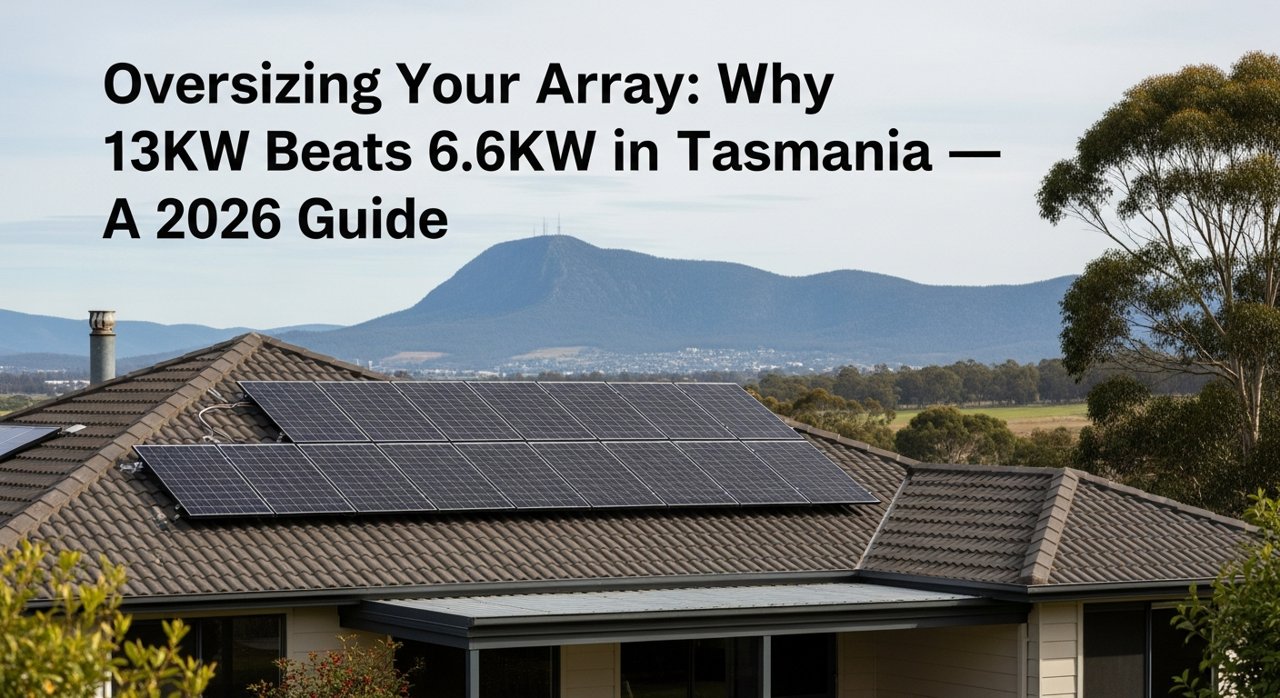
Tasmanian households are switching on to solar power like never before, but the game has changed. The old advice was often to install a 6.6kW system, which was a great starting point. In 2026, however, with our homes using more electricity for heating, hot water, and cars, a bigger system is often the smarter, more future-proof choice.
This guide explains why a modern, oversized solar array—around 13kW of panels on a 10kW inverter—is fast becoming the new standard for savvy Tasmanian homes.
Is a 6.6kW solar system still big enough for Tasmania?
For many households, a 6.6kW system is no longer the most cost-effective choice in the long run. While it can cover a portion of your daily electricity use, it may not be sufficient for a home that plans to electrify. If you’re considering adding a heat pump, an induction cooktop, or an electric vehicle (EV) in the future, a 6.6kW system will likely leave you buying a lot of power from the grid, especially during peak times.
The key to solar savings in Tasmania isn’t selling power back to the grid; it’s using the power you generate yourself. This is called self-consumption. With Aurora Energy’s retail power price sitting around 28-30 cents per kilowatt-hour (c/kWh) and the solar feed-in tariff you receive for exports being a more modest 9.276 c/kWh (from 1 July 2026), every kilowatt-hour you use directly from your roof saves you roughly three times what you’d earn by exporting it. A larger system gives you a much bigger bucket of free, clean energy to use throughout the day.
Why is a 13kW system the new sweet spot?
A system with around 13kW of panels paired with a 10kW inverter is the new gold standard for future-focused Tasmanian homes. This setup takes advantage of a rule that lets you “oversize” your solar panel array by up to 133% of your inverter’s capacity. This doesn’t damage the inverter; it simply means you generate more power for more of the day.
Here’s why it works so well in our climate:
- Better performance on cloudy days: Tasmania gets its fair share of overcast weather. A larger array will generate more power in low-light conditions, helping to run your home when a smaller system might be struggling.
- A broader production curve: Your system will start producing meaningful power earlier in the morning and continue later into the afternoon. This extended “solar window” gives you more opportunity to run appliances with your own free power.
- Powering your future: A 13kW system is built for an all-electric home. It can comfortably handle the load of a heat pump for hot water, reverse cycle air conditioning, and charging an EV, significantly reducing your reliance on grid power.
The good news is that most Tasmanian homes can install a 10kW inverter on a standard single-phase connection, as this is the limit allowed by TasNetworks. This means you likely won’t need an expensive three-phase power upgrade to get a powerful, future-ready solar system.
How do solar rebates work in Tasmania?
The main financial incentive for installing solar is the federal Small-scale Renewable Energy Scheme (SRES), often called the “solar rebate.” This isn’t a cash payment but an upfront discount on the cost of your system. It works by creating Small-scale Technology Certificates (STCs) based on your system’s size and your location.
Tasmania is in STC Zone 4. A larger system, like a 13kW array, is eligible for more STCs than a smaller 6.6kW one, which can significantly reduce the initial purchase price. Your solar installer will almost always handle the paperwork and apply this discount directly to your quote. It’s important to remember that the value of STCs can fluctuate, and the scheme is gradually being phased out, so the discount available will reduce over time.
Should I get a battery with my solar panels?
A battery can be a fantastic addition, but it’s important to be realistic about the payback period in Tasmania. Our relatively low electricity prices and fair feed-in tariff mean the financial case for a battery is less urgent here than on the mainland. For most, the payback period for the solar panels might be in the range of 4-6 years, while adding a battery could extend the total system payback to somewhere between 7 and 12 years.
The new federal Cheaper Home Batteries Program, which began on 1 July 2025, can help with the cost. If you and your chosen battery system are eligible, this program could provide a discount of around 30% or more off the battery’s cost. The program provides a rebate per usable kilowatt-hour (kWh) of battery capacity and tapers down each year until 2030. There is no separate Tasmanian state government battery rebate.
So, why get a battery in Tassie?
- Maximise self-consumption: A battery stores your excess solar energy from the middle of the day to use in the evening, when your home’s consumption is often highest. This is the primary way a battery saves you money—by helping you avoid buying expensive evening power from the grid.
- Backup power: For those in areas prone to power outages, a battery can provide invaluable peace of mind, keeping your lights, fridge, and other essential circuits running.
- Advanced energy management: For the tech-savvy, some energy retailers allow you to access wholesale electricity spot prices. A smart battery can be automated to charge from the grid when prices are very low or even negative, and then power your home when prices are high, creating another avenue for savings.
For most households on a standard Aurora tariff, the main value of a battery is unlocking evening self-consumption and providing backup.
What’s the right choice for my home?
Deciding on the right system comes down to your current and, most importantly, your future energy needs.
| Your Household Situation | Recommended Approach |
|---|---|
| Low energy user: Small household, gas heating/hot water, no plans for an EV. | A smaller, high-quality 6.6kW system could be a good fit. It will offset your daytime usage without over-investing in capacity you may not use. |
| Average family home: Thinking about a heat pump or an EV in the next 5 years. | A 13kW system (13kW of panels on a 10kW inverter) is the smart, forward-thinking choice. It prepares you for future electricity needs and maximises self-consumption today. |
| All-electric champion: You already have an EV, heat pump hot water, and induction. | A 13kW system is your starting point. You might even consider a larger system if your roof space and budget allow, especially when paired with a battery to cover evening demand. |
Ultimately, oversizing your solar array is about energy independence. It’s an investment in locking in a lower cost for your electricity for decades to come, insulating your family from future price rises and giving you the freedom to power your life with clean energy from your own roof.
This guide was written by the team at Solar Generation Tasmania. We’re a local Tasmanian company passionate about helping our community make informed solar choices.
#solargentas #solargen #solargenerationtasmania
Published by Solar Generation Tasmania. General information current as at publication — rebates, tariffs and prices change, so confirm current figures before deciding.
Thinking about solar for your place?
Tell us a little about your home and a local Tasmanian installer will put together a free, no-obligation assessment — system, battery and the rebates you qualify for.
- Honest advice for Tasmanian conditions (Zone 4 sun, hydro grid)
- We apply every rebate you’re eligible for
- Local installers — not a mainland call centre
- SAA-accredited, with degree-qualified owners and 10+ years in tech & solar