
← Blog · 18 July 2026
Pairing Solar with a Hot Water Diverter in Tasmania
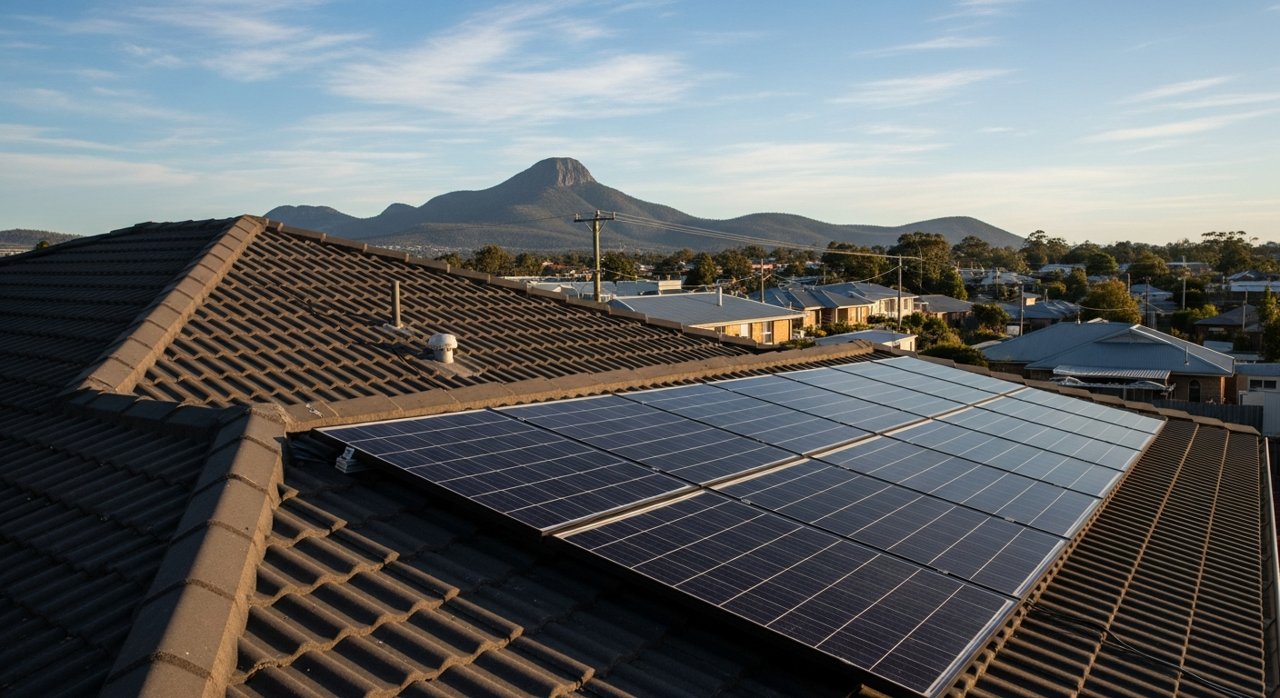
Tasmania’s sunny days are a brilliant, untapped resource for many homeowners. With electricity prices always a hot topic, you’ve likely wondered if solar panels are a smart move for your Tassie home. The short answer is a resounding yes for most, but the way you use that solar power is the key to unlocking the biggest savings. It’s not just about panels on the roof; it’s about smart self-consumption.
This guide, written by locals for locals, cuts through the noise. We’ll explain why pairing solar with a simple device called a hot water diverter can be one of the most effective energy strategies for a Tasmanian household, often making more financial sense than a battery right away.
How do solar savings actually work in Tasmania?
The biggest savings from solar in Tasmania come from using your own solar power during the day, not from selling it back to the grid. This is called “self-consumption.” When your panels are generating electricity, you can power your appliances for free instead of buying expensive power from the grid.
Think of it this way: you might pay around 28-30 cents for every kilowatt-hour (kWh) of electricity you import from Aurora Energy. But for every kWh of excess solar you export, the regulated feed-in tariff is a more modest 9.276 c/kWh (from 1 July 2026). The maths is simple: using your own solar power can save you more than three times what you’d earn by exporting it. The goal is to shift as much of your energy use as possible into the sunny hours of the day.
What is a solar hot water diverter?
A solar hot water diverter is a clever, lunchbox-sized device that makes your existing electric hot water cylinder act like a battery. It constantly monitors your home’s energy use and, whenever it sees excess solar power about to be exported to the grid, it diverts that free energy to your hot water system’s heating element.
Instead of exporting that valuable solar for a low feed-in tariff, you’re using it to heat your water for free. This is a powerful strategy because heating water is one of the biggest single energy users in most Tasmanian homes, often accounting for 30-40% of a power bill. A diverter ensures this job is done using free sunshine before you even think about exporting.
Should I get a diverter or a home battery?
For many Tasmanians, starting with a solar diverter is the more cost-effective first step. A quality diverter is a fraction of the cost of a home battery and targets the single biggest energy user in the house, delivering significant savings for a small investment. A home battery is a fantastic piece of technology, but its payback period is longer in Tasmania.
Here’s a quick comparison to help you decide:
| Feature | Solar Hot Water Diverter | Home Battery |
|---|---|---|
| Primary Job | Uses excess solar to heat water. | Stores excess solar to power the whole house at night. |
| Upfront Cost | Relatively low. | Significant investment. |
| Payback Period | Typically quite short, often 2-4 years. | Generally longer in Tasmania, around 7-12 years. |
| Main Benefit | Maximises self-consumption for a high-energy task. | Provides evening power and blackout protection. |
| Best For | Nearly every home with solar and an electric hot water cylinder. | Homes wanting to maximise energy independence and have backup power. |
While the federal Cheaper Home Batteries Program (from 1 July 2025) may offer a rebate of around 30% on eligible batteries, making them more attractive, the financial case is still developing. Tasmania’s relatively fair feed-in tariff and stable hydro-powered grid mean the payback for batteries is slower here than on the mainland. A diverter offers a more immediate and certain return on investment.
What size solar system is right for a Tassie home?
The old standard of a 6.6kW system is becoming outdated for households looking to the future. For most Tasmanian homes, especially those planning to add an electric vehicle (EV), a heat pump, or an induction cooktop, a larger system of around 13kW of panels paired with a 10kW inverter is the new smart default.
Why so big?
- Future-Proofing: An “all-electric” home uses significantly more power. A larger system ensures you have enough generation to cover future needs.
- TasNetworks Rules: In Tasmania, most residential properties with single-phase power can install up to a 10kW inverter, which is larger than in many other states. This allows you to maximise your roof space without needing an expensive three-phase power upgrade.
- Maximising Generation: By “oversizing” the panels relative to the inverter (e.g., 13kW of panels on a 10kW inverter), you generate more power on cloudy days and for more hours of the day, from sunrise to sunset.
Of course, if you have a very small home, low energy usage, and no plans to electrify, a smaller system might be perfectly adequate. The key is to match the system to your long-term goals.
How do government solar rebates work here?
The main financial incentive for installing solar is the federal Small-scale Renewable Energy Scheme (SRES), often called the “solar rebate.” It’s not a cash-back offer but an upfront discount on the system’s installation cost.
The scheme works by creating Small-scale Technology Certificates (STCs) based on your system’s size and location. Tasmania is in STC Zone 4. Your installer claims these certificates on your behalf and applies the value as a point-of-sale discount, saving you thousands of dollars. This discount is already included in the advertised price of a system. Eligibility for STCs depends on your system meeting certain criteria, so it’s important to use a reputable installer.
Is my roof suitable for solar panels?
Most Tasmanian roofs are great for solar. The ideal orientation is north-facing, as this captures the most sun throughout the day. However, east and west-facing panels are also highly effective, especially for capturing morning and afternoon sun, which can align well with household energy usage patterns.
An experienced installer will use design software to map out the best panel layout for your specific roof, considering factors like:
- Shading: Trees or neighbouring buildings can impact performance.
- Roof Angle and Condition: The pitch of the roof and its structural integrity are important.
- Available Space: How many panels can physically and safely fit.
Even if your roof isn’t a perfect, north-facing rectangle, a well-designed system can still be incredibly productive and a worthwhile investment.
Your Practical Takeaway
For the majority of Tasmanian homeowners, the path to significant electricity bill savings is clear: install a generously sized solar system (think 10-13kW) to future-proof your home, and pair it with a hot water diverter from day one. This combination tackles your biggest energy load for a fraction of the cost of a battery, maximising your self-consumption and delivering a faster return on your investment. It’s the smart, practical, and cost-effective Tassie solar strategy.
This guide was written by the local team at Solar Generation Tasmania. We’re always happy to help our fellow Tasmanians understand their energy options.
#solargentas #solargen #solargenerationtasmania
Published by Solar Generation Tasmania. General information current as at publication — rebates, tariffs and prices change, so confirm current figures before deciding.
Thinking about solar for your place?
Tell us a little about your home and a local Tasmanian installer will put together a free, no-obligation assessment — system, battery and the rebates you qualify for.
- Honest advice for Tasmanian conditions (Zone 4 sun, hydro grid)
- We apply every rebate you’re eligible for
- Local installers — not a mainland call centre
- SAA-accredited, with degree-qualified owners and 10+ years in tech & solar