
← Blog · 9 August 2026
Questions to Ask Before You Sign a Solar Contract — A 2026 Guide
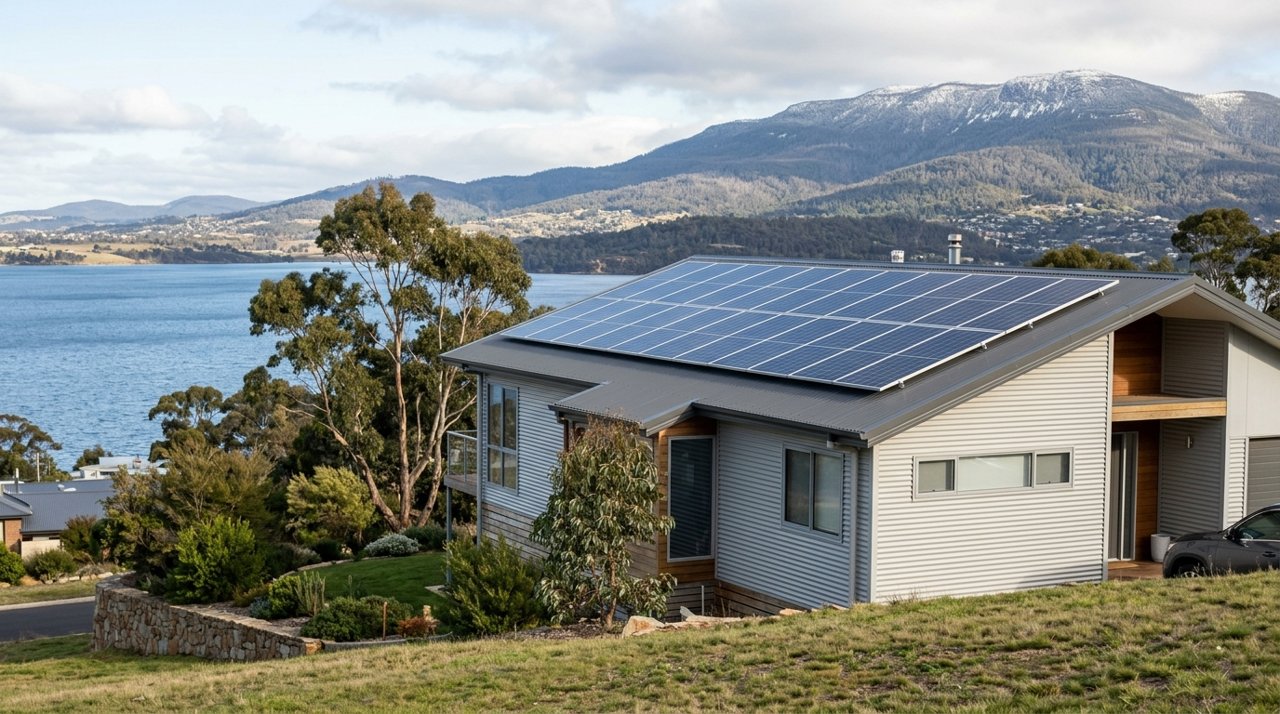
The biggest savings from solar in Tasmania come from using the power you generate yourself, not from selling it back to the grid. When you use your own solar power, you avoid buying electricity from your retailer at a cost of roughly 28-30 cents per kilowatt-hour (c/kWh). In contrast, the regulated feed-in tariff you receive for exporting surplus power to the grid is modest, sitting at 9.276 c/kWh from 1 July 2026. This price difference means every kilowatt-hour of solar you use directly in your home saves you about three times what you’d earn by exporting it.
What size solar system should I get for my home?
For most Tasmanian households planning to electrify in the future, a system of around 13kW of panels paired with a 10kW inverter is a smart, forward-thinking choice. This is a significant step up from the 6.6kW systems that were common in the past. The larger size accounts for future additions like an electric vehicle (EV), a heat pump for hot water, or an induction cooktop. Importantly, Tasmania’s network rules allow for a 10kW single-phase inverter, meaning most homes won’t need an expensive three-phase power upgrade to accommodate a system of this size. However, for a household with very low electricity usage and no plans for major electrification, a smaller system may be more suitable.
Is there a solar rebate in Tasmania?
Yes, Tasmanian homeowners can access a federal government incentive that provides a significant upfront discount on the cost of a new solar system. This incentive is part of the Small-scale Renewable Energy Scheme (SRES) and is delivered through Small-scale Technology Certificates (STCs). The value of the discount depends on your system’s size and your location. Tasmania is designated as STC Zone 4. Your installer will typically handle the process of claiming these certificates and apply the discount directly to your quote, so you only pay the final, reduced price.
Should I get a battery with my solar panels?
A battery can be a great addition, but it’s important to be realistic about the financial return in Tasmania. The main benefits are storing your excess solar power for use in the evening (maximising self-consumption) and providing backup power during a blackout. While a battery increases your energy independence, the payback period is generally longer here than on the mainland, often around 7 to 12 years, compared to 4 to 6 years for solar panels alone. This is due to Tasmania’s relatively low and stable electricity prices.
There is no separate Tasmanian state government rebate for batteries. However, from 1 July 2025, the federal Cheaper Home Batteries Program can provide a discount of roughly 30% on the upfront cost of an eligible battery when it’s installed with a solar system. The program provides a set discount per usable kilowatt-hour (kWh) of battery capacity, with the full rate applying to the first 14kWh.
Key points for considering a battery in Tasmania:
- Main Value: Maximising self-consumption and providing backup power.
- Federal Rebate: The Cheaper Home Batteries Program can reduce the initial cost.
- No State Rebate: Tasmania does not currently offer a state-level battery subsidy.
- VPPs: Retailer-led Virtual Power Plant (VPP) programs, which pay you for allowing them to use your battery to support the grid, are not currently operating for residential customers in Tasmania.
How does the solar feed-in tariff work?
The solar feed-in tariff is the rate your electricity retailer pays you for any surplus solar energy your system exports to the electricity grid. In Tasmania, this rate is set annually by the independent Tasmanian Economic Regulator. From 1 July 2026, the minimum regulated tariff that retailers like Aurora Energy must offer is 9.276 c/kWh. Because this export rate is much lower than the price you pay to import electricity from the grid (around 28-30 c/kWh), the financial strategy for solar is clear: use as much of your own solar power as you can during the day.
| Your Action | Your Electricity Rate (approx.) | Financial Outcome |
|---|---|---|
| Use your own solar power | Avoids buying at ~29 c/kWh | High Savings |
| Export surplus solar power | Earns a credit of 9.276 c/kWh | Modest Earnings |
What questions should I ask a solar installer before signing?
Choosing the right installer is as important as choosing the right equipment. A good installer will be transparent and thorough. Here are some crucial questions to ask before you commit:
- About the Company:
- Are you a New Energy Tech Approved Seller (a signatory to the New Energy Tech Consumer Code)?
- Who will be doing the actual installation, and are they accredited by Solar Accreditation Australia (SAA)?
- Can you provide detailed datasheets for the specific panels and inverter you are quoting?
- What warranties are offered on the panels, the inverter, and the installation workmanship itself?
- About the System Design:
- Why have you recommended this specific system size for my home?
- Have you accounted for any shading from trees or neighbouring buildings in your performance estimates?
- Where will the panels and inverter be located, and why?
- About the Process & Costs:
- Is the quote fully inclusive of all costs, including installation, safety switches, and any necessary meter changes?
- What is the estimated timeline from signing the contract to the system being fully operational?
- Who handles the grid connection application with TasNetworks?
A key takeaway for any Tasmanian considering solar is to focus on quality and future-proofing your home. Investing in a well-designed system from a reputable installer will ensure you maximise your savings for decades to come.
This guide was written by the team at Solar Generation Tasmania. We’re locals who are passionate about helping Tasmanians navigate their solar journey with honest, practical advice.
#solargentas #solargen #solargenerationtasmania
Published by Solar Generation Tasmania. General information current as at publication — rebates, tariffs and prices change, so confirm current figures before deciding.
Thinking about solar for your place?
Tell us a little about your home and a local Tasmanian installer will put together a free, no-obligation assessment — system, battery and the rebates you qualify for.
- Honest advice for Tasmanian conditions (Zone 4 sun, hydro grid)
- We apply every rebate you’re eligible for
- Local installers — not a mainland call centre
- SAA-accredited, with degree-qualified owners and 10+ years in tech & solar