
← Blog · 27 July 2026
Single-Phase vs Three-Phase Solar in Tasmania — A 2026 Guide
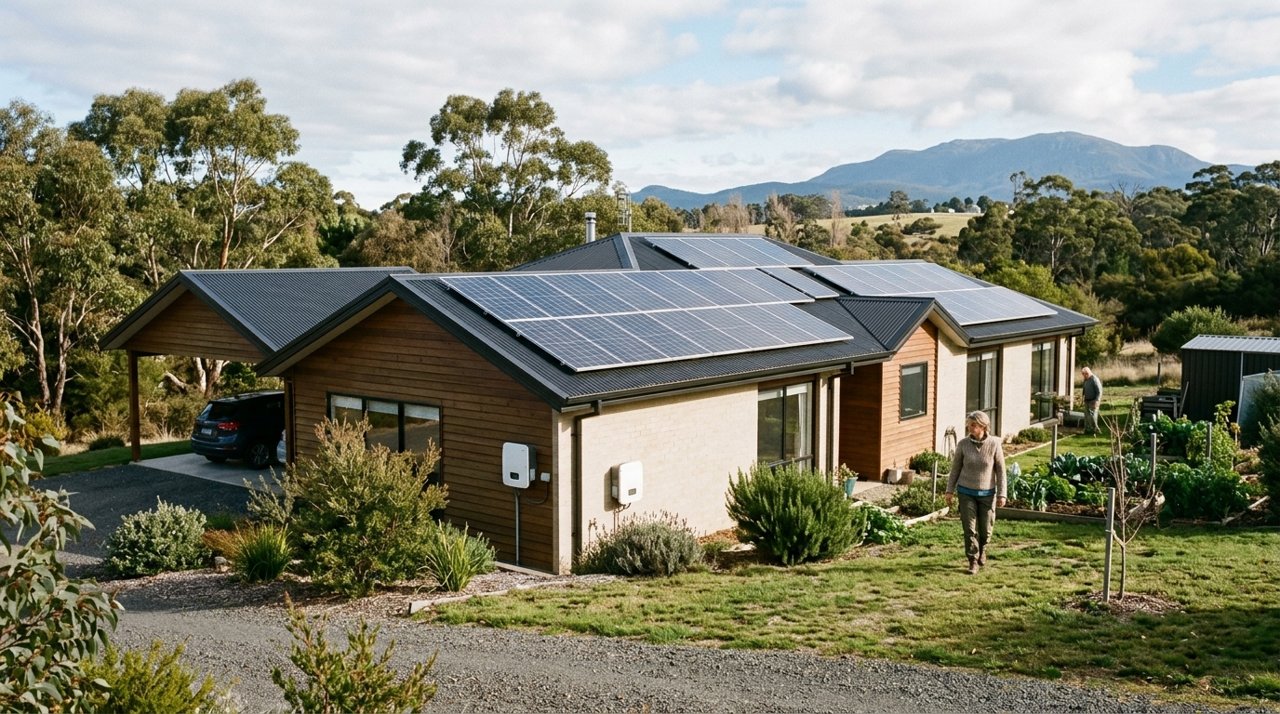
For most Tasmanian homes, the answer is no. You can install a large, future-proof solar system using your existing single-phase connection. TasNetworks, the authority for our poles and wires, allows a generous 10kW inverter on a single-phase supply, which is significantly more than most mainland states and is enough for the vast majority of households, even those planning to get an electric vehicle (EV) and a heat pump.
Three-phase power, which has three active wires instead of one, is typically found in larger homes, rural properties, or houses with powerful workshop equipment. While it allows for even bigger solar systems (up to 30kW), the cost to upgrade your home’s connection can be substantial and is often unnecessary for achieving significant energy savings with solar.
What size solar system is right for a Tassie home in 2026?
A ~13kW system is becoming the new standard for Tasmanian households looking to future-proof their energy needs. This typically involves installing around 13.3kW of solar panels connected to a 10kW inverter. This setup takes advantage of a rule that lets you “oversize” your panel capacity by up to 133% of your inverter’s capacity while still being eligible for the federal solar rebate.
Why so big? The goal is self-consumption. You save the most money by using your own solar power, which costs nothing to generate, instead of buying electricity from the grid at around 28-30 c/kWh. Exporting surplus power back to the grid only earns a modest feed-in tariff of 9.276 c/kWh (from 1 July 2026). A larger system ensures you have ample power for your home during the day and enough surplus to charge a future battery or EV, especially during Tasmania’s less sunny winter months.
Of course, if your home has very low electricity usage and you don’t plan on adding an EV or other major electric appliances, a smaller system like the classic 6.6kW (on a 5kW inverter) can still be a great investment.
Is it better to have single-phase or three-phase for a large solar system?
For most homes, a single-phase connection is perfectly fine and more cost-effective. Since TasNetworks permits a 10kW inverter on a single phase, you can install a powerful ~13.3kW solar array without needing an expensive electrical upgrade. This is the sweet spot for future-proofing a typical Tasmanian home.
However, three-phase power does have advantages if you have exceptionally high energy needs.
| Feature | Single-Phase Solar | Three-Phase Solar |
|---|---|---|
| Max Inverter Size | 10kW in Tasmania | 30kW in Tasmania |
| Ideal For | The vast majority of Tasmanian homes, including those with an EV and heat pump. | Very large homes, properties with workshops, or those running multiple high-power appliances simultaneously (e.g., large ducted air-con, pool pumps). |
| Grid Connection | Uses your standard, existing connection. | May require a costly upgrade to your home’s connection from the street. |
| Backup Power | With a battery, can provide seamless backup for your essential circuits during a blackout. | With a compatible three-phase battery, can back up appliances across all three circuits. A single-phase battery will only back up one. |
The key takeaway is that Tasmania’s generous 10kW single-phase limit means most homeowners don’t need to consider a three-phase upgrade just for solar.
How do solar rebates work in Tasmania?
The main financial support for installing solar in Tasmania comes from the federal government’s Small-scale Renewable Energy Scheme (SRES). This is not a cash rebate but an upfront discount on the cost of your system.
Here’s how it works:
- Your solar system is eligible for a number of Small-scale Technology Certificates (STCs).
- The number of STCs depends on your system’s size and your location. Tasmania is in STC Zone 4.
- The STC scheme is being phased out, so the value of the discount reduces slightly each year until it ends in 2030.
- Your installer claims the STCs on your behalf and applies the value as a discount on your quote. You only pay the final, lower price.
It’s important to note that you must use an installer accredited by Solar Accreditation Australia (SAA) to be eligible for the STC discount.
Are home batteries worth it in Tasmania?
A home battery can be a valuable addition, but the financial payback is slower in Tasmania compared to the mainland. The primary value of a battery here is for self-consumption—storing free solar energy from the daytime to use at night—and for providing backup power during outages.
The new federal Cheaper Home Batteries Program, which started on 1 July 2025, can reduce the upfront cost of an eligible battery by around 30%. The program provides a discount based on the battery’s size, with the full rate applying to the first 14kWh of capacity. To be eligible, the battery must be installed with a new or existing solar panel system. There are no separate Tasmanian state government battery rebates currently available.
Even with this support, the payback period for a battery is generally estimated to be around 7-12 years, compared to 4-6 years for the solar panels alone. This is because Tasmania’s electricity isn’t as expensive as in other states, and our feed-in tariff is relatively fair, which slightly reduces the savings a battery can make. Furthermore, opportunities to earn extra income from your battery by participating in a Virtual Power Plant (VPP) are very limited in Tasmania’s unique hydro-dominated grid.
What’s the final word?
For the majority of Tasmanian homeowners, future-proofing with a large ~13kW solar system on your existing single-phase connection is the smartest move. It maximises your ability to self-consume clean energy, drastically cutting your power bills as you electrify your home with things like an EV or a heat pump. You don’t need the extra complexity or cost of a three-phase upgrade.
While a battery is a fantastic tool for energy independence and blackout protection, approach it with realistic expectations. The federal discount helps, but the financial return is a long-term game in Tasmania. The real win, for now, comes from installing a generous amount of solar panels and shifting as much of your energy use as possible into the daylight hours.
This guide was written by the team at Solar Generation Tasmania. We’re locals who are passionate about helping Tasmanians understand their energy options.
#solargentas #solargen #solargenerationtasmania
Published by Solar Generation Tasmania. General information current as at publication — rebates, tariffs and prices change, so confirm current figures before deciding.
Thinking about solar for your place?
Tell us a little about your home and a local Tasmanian installer will put together a free, no-obligation assessment — system, battery and the rebates you qualify for.
- Honest advice for Tasmanian conditions (Zone 4 sun, hydro grid)
- We apply every rebate you’re eligible for
- Local installers — not a mainland call centre
- SAA-accredited, with degree-qualified owners and 10+ years in tech & solar