
← Blog · 22 June 2026
Single-Phase, Two-Phase & Three-Phase Solar in Tasmania
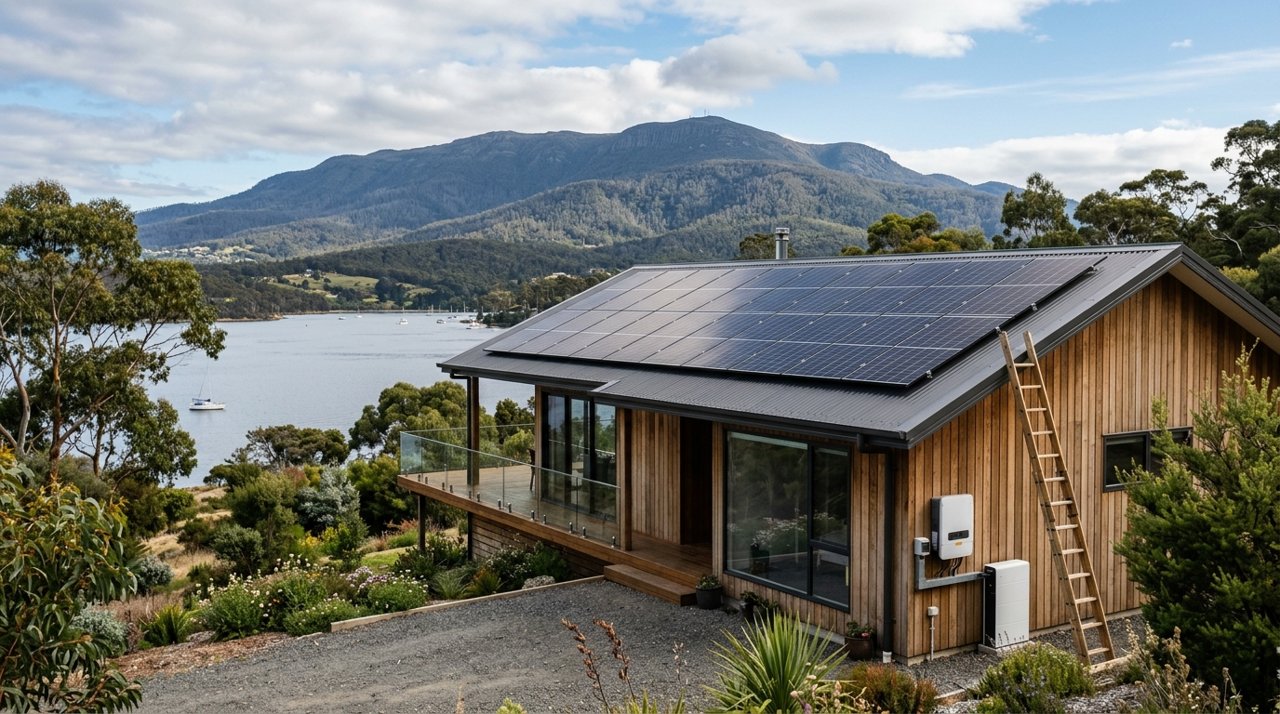
Making the switch to solar is a big decision for any Tasmanian household. It’s a fantastic way to get a handle on rising power bills and do your bit for the planet. But once you start looking into it, the technical jargon can get a bit much. One of the first questions that often pops up is about “phases” – usually framed as a simple choice between single-phase and three-phase.
Here in Tassie, though, there’s a third option that a lot of mainland advice completely ignores: two-phase. It’s genuinely common in our older homes, and if you’ve got it, there are a few design details — phase balancing, metering and the right inverter — that make a real difference, especially once you add a battery. Let’s clear it all up.
What’s the Difference, Anyway?
Think of your home’s power supply like a road.
- Single-phase power is like a single-lane road. It delivers electricity down one live wire and is the standard connection for most Australian homes — including a lot of Tasmanian ones.
- Two-phase power is the Tasmanian curveball. A surprising number of older Tassie homes were wired with two phases — often by “splitting” the supply so a big appliance like the electric hot-water system sat on its own phase or its own tariff. You rarely see this on the mainland, but it’s common enough in Tasmania’s older housing stock that it’s always worth checking. TasNetworks’ own installation rules describe this split-phase arrangement.
- Three-phase power is like a three-lane highway, with three live wires. It gives a more robust supply and is common in commercial buildings, rural properties with heavy machinery, and some larger modern homes with big ducted air-conditioning.
How can you tell which you’ve got? Have a look at your switchboard. A single-phase home has one main service fuse; a two-phase home has two (and often two meters — a classic Tassie giveaway); a three-phase home has three, usually with the main switches linked together. If you’re not sure, don’t guess — a good installer will confirm it on a site visit.
What Each One Means for Your System Size
Our network operator, TasNetworks, sets the limits for standard residential solar (a “Basic Micro Embedded Generation” connection, under the national standard AS/NZS 4777.2). Without any special negotiated connection:
- Single-phase: up to a 10kW (10 kVA) inverter, with up to 10kW of export.
- Two-phase: the same — up to a 10kW inverter and 10kW export. Being on two phases does not let you install a bigger system than a single-phase home under the standard rules.
- Three-phase: up to 30kW (10 kVA per phase) and 30kW export — only relevant for very large homes or light commercial.
There’s also no longer a cap on how many panels you can fit — TasNetworks looks at the inverter, not the panel array. Thanks to the Clean Energy Council’s 133% “oversizing” rule, you can pair around 13kW of panels with a 10kW inverter. So whether your home is single- or two-phase, you can still run a powerful, future-proof ~13kW system without an expensive three-phase upgrade.
Good News First: Net Metering Means Your Bill Doesn’t Care About Phases
There’s a myth that if your solar is on “the wrong phase” you’ll lose money. In Tasmania, that’s not how the bill works.
Your TasNetworks smart meter measures the net flow across all your phases combined, interval by interval. If you’re exporting 3kW of solar on one phase while drawing 1kW each on two others, the meter records a net export of 1kW — it does not charge you for the import on the other phases. You get the full credit for every kilowatt you generate, no matter which phase it comes from. This whole-of-supply netting is what people mean by net metering, and it’s why a single-phase inverter on a multi-phase home is still a perfectly sound, cost-effective choice.
(Net metering is worth understanding properly — how it’s billed, how it interacts with the feed-in tariff and time-of-use plans — so we’ll publish a dedicated deep-dive guide on it shortly.)
So What Does Matter on a Multi-Phase Home?
Net metering takes the billing worry off the table. But three things still genuinely matter when you design the system — and they matter most once you add a battery:
- Backup is per-phase. A standard single-phase inverter or battery can only provide blackout backup to the one phase it’s wired to. In an outage, anything on your other phase(s) stays dark. If whole-home backup matters to you, it has to be designed in deliberately — either with a three-phase-capable system, or by making sure your essential circuits (fridge, a few lights, internet) sit on the backed-up phase.
- Your inverter needs to “see” the whole house. Smart and hybrid inverters decide when to charge the battery, when to discharge, and how to stay under the export limit by reading a consumption meter — small CT clamps on your supply. On a multi-phase home those CTs must be fitted to every phase. Miss one and the system only sees part of your usage, so it makes poor calls — charging from the grid when it shouldn’t, or exporting when you could have self-consumed. A proper multi-phase energy meter is the fix, and it’s cheap insurance.
- Phase balancing. Spreading your generation, your battery and your big loads sensibly across the available phases keeps each phase within its limits, keeps the network connection healthy, and makes both backup and self-consumption work the way you expect. On a two-phase home especially, this is a deliberate design choice — not something to leave to chance.
Where Three-Phase Inverters and Energy Meters Come In
These are the two main tools for handling the multi-phase quirk well:
- Three-phase inverters spread their solar generation — and, in a hybrid, their battery charging — evenly across all three phases. That keeps the supply balanced automatically, sits neatly within TasNetworks’ per-phase rules, and (with a compatible battery) can back up the whole home rather than a single phase. They’re the natural choice if you already have three-phase power.
- Whole-home energy meters / CT metering. Whatever inverter you choose, fitting current-transformer clamps across all your phases lets the system measure true net household consumption. That’s what makes accurate self-consumption, smart battery charging and compliant export-limiting possible on a two- or three-phase home. On a two-phase home with a single-phase inverter, this is the single most important box to tick.
The takeaway: the hardware to handle two-phase properly exists and isn’t exotic — it just has to be specified on purpose. Before you sign, ask: “My home is multi-phase — how will the system meter all my phases, and what gets backed up in a blackout?”
When Three-Phase Power Might Be Worth It
For most homes, single- or two-phase is plenty. Three-phase only really earns its keep if:
- You already have it — then a three-phase inverter makes sense, to balance generation and enable whole-home backup.
- You run heavy equipment — a big workshop, commercial-grade air-conditioning, or large pumps.
- You genuinely need more than 10kW of inverter capacity, which is very rare for a home.
Upgrading a single- or two-phase home to three-phase just for solar is almost never worth the cost.
Why Self-Consumption Still Matters Most
Whatever phase setup you have, the real key to saving money in Tasmania is how you use your power. Aurora Energy’s regulated feed-in tariff for 2026–27 is 9.276c/kWh for what you export, while you pay roughly 25–29c/kWh to buy it back. The power you generate and use yourself is worth about three times more than the power you sell.
So run the dishwasher, washing machine, heat pump and EV charger during daylight hours, and let a battery soak up the rest. A larger ~13kW system gives you a wider generation window to do exactly that — especially on those overcast Tassie days. Getting your metering and (if fitted) your battery set up correctly across your phases is what lets you actually capture that self-consumption.
What About Batteries and Rebates?
A battery is the ultimate self-consumption tool — it stores your daytime surplus for use at night instead of exporting it cheaply. Solar alone typically pays back in 4–6 years; adding a battery stretches that to roughly 7–12 years, but brings blackout backup and energy independence. The federal Cheaper Home Batteries program can cut the upfront cost. And don’t forget the main solar rebate (the SRES/STC scheme) — Tasmania sits in STC Zone 4, and any reputable installer rolls that discount into your quote.
The Bottom Line
For a single-phase home, the phase question is a non-issue: a 10kW inverter with ~13kW of panels is the modern sweet spot. If you’re one of the many Tasmanian homes on two-phase, don’t panic — thanks to net metering your bill is credited correctly across phases, and the limits are the same as single-phase. What matters is the design: meter every phase, balance your loads, and think about what you want backed up before you choose the inverter and battery. Get those right and you’ll get the full value out of the very same system.
The takeaway: confirm your connection type early, size for your future (not just today), and if you’re multi-phase, make metering, backup and phase balancing part of the conversation before you sign.
This guide was written by the local team at Solar Generation Tasmania. We’re always happy to help fellow Tasmanians understand their energy options.
#solargentas #solargen #solargenerationtasmania
Published by Solar Generation Tasmania. General information current as at publication — rebates, tariffs and prices change, so confirm current figures before deciding.
Thinking about solar for your place?
Tell us a little about your home and a local Tasmanian installer will put together a free, no-obligation assessment — system, battery and the rebates you qualify for.
- Honest advice for Tasmanian conditions (Zone 4 sun, hydro grid)
- We apply every rebate you’re eligible for
- Local installers — not a mainland call centre
- SAA-accredited, with degree-qualified owners and 10+ years in tech & solar