
← Blog · 9 July 2026
Sizing an Off-Grid Solar and Battery System for a Tasmanian Winter
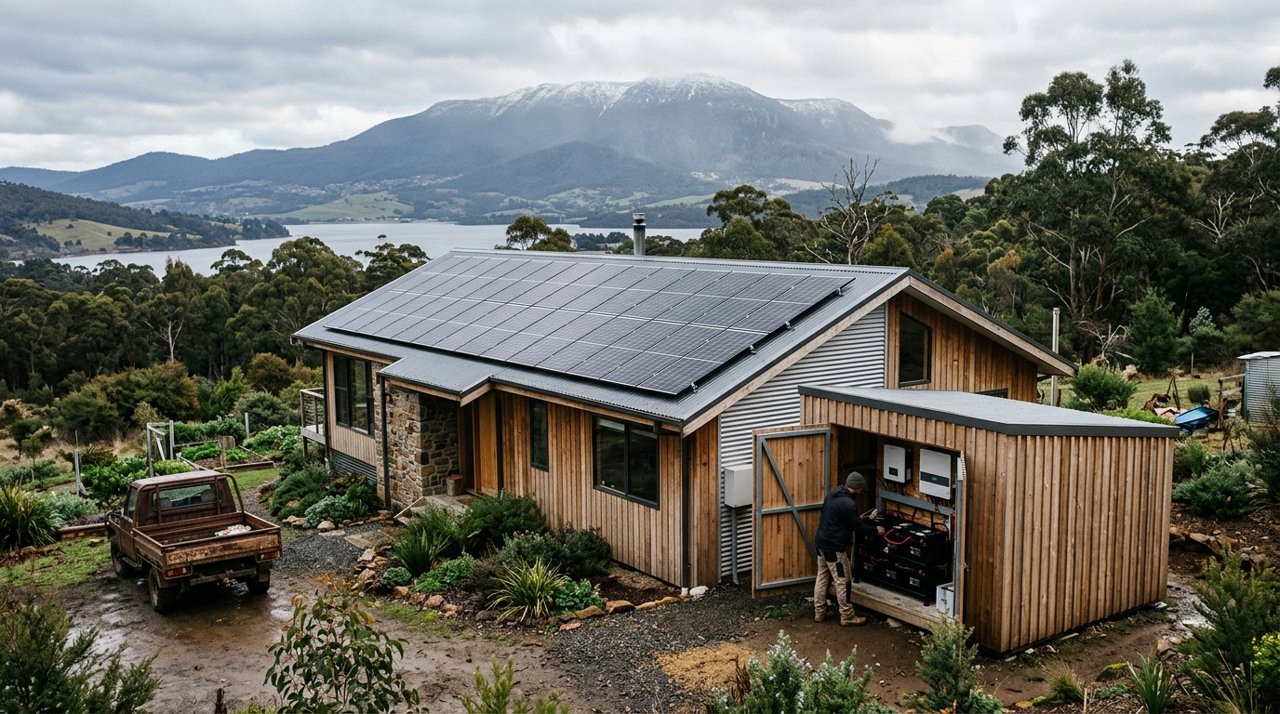
Yes, solar panels absolutely work in Tasmania’s winters, even on cloudy days. While they produce less power than in summer due to shorter days and lower sun angles, a correctly sized system is designed to significantly reduce your reliance on the grid during the colder months. The key is to generate enough power to cover your daytime usage, which is often higher in winter with heaters and lights running.
Modern solar panels are very efficient in overcast conditions and still capture plenty of sunlight. Tasmania gets enough annual sunlight to make solar a smart investment. The financial savings come from using your own solar power instead of buying expensive electricity from the grid, a strategy known as self-consumption.
How big should my solar system be?
For most Tasmanian households looking to future-proof their home, a system with around 13kW of panels paired with a 10kW inverter is becoming the new standard. This is a significant step up from the 6.6kW systems that were common a few years ago. This larger size accounts for future energy needs like charging an electric vehicle (EV), switching to a heat pump for hot water, or installing an induction cooktop.
TasNetworks, our grid operator, allows a 10kW inverter on a standard single-phase connection, which most Tasmanian homes have. This means you can install a powerful system without needing a costly three-phase upgrade. However, for a smaller household with low electricity usage and no plans to electrify, a smaller system might be more suitable.
What about adding a battery?
A home battery lets you store your excess solar power generated during the day to use at night, which is when most households use the most electricity. This dramatically increases your self-consumption and provides a valuable backup power source during grid outages.
In Tasmania, the main financial benefit of a battery is avoiding the high cost of evening power from the grid, which is typically around 28-30 cents per kilowatt-hour (c/kWh). The regulated feed-in tariff you receive for exporting excess solar is modest (9.276 c/kWh from 1 July 2026), so storing that power for your own use is much more valuable.
It’s important to be realistic about payback times. While solar panels can often pay for themselves in around 4-6 years, the battery portion of the system has a longer payback period, generally in the 7-12 year range. Tasmania’s relatively cheap hydro-generated power means the financial case for batteries isn’t as urgent as on the mainland, but for energy independence and outage protection, they are fantastic.
Are there any rebates for solar and batteries in Tasmania?
Yes, there are federal government incentives available, but no separate state-based rebates in Tasmania.
- Small-scale Technology Certificates (STCs): This is a federal scheme that provides an upfront discount on the cost of installing a solar panel system. The value of the discount depends on the size of your system and your location. Tasmania is in STC Zone 4, which provides a solid rebate that a good installer will apply directly to your quote.
- Cheaper Home Batteries Program: Starting from 1 July 2025, this federal program can provide a significant discount on the cost of an eligible battery system when it’s installed with solar. The rebate could be around 30% of the battery cost, potentially taking about $250 per usable kWh off the price for the first 14kWh. It’s important to note that eligibility criteria apply, and the rebate value is designed to taper down each year until 2030.
These incentives can make a real difference to the upfront cost, but it’s crucial to get advice based on your specific situation, as eligibility is never guaranteed.
How do I size a system for winter off-grid living?
Sizing an off-grid system for a Tasmanian winter requires careful planning to ensure you have enough power when the sun is lowest and the days are shortest. The process is more detailed than for a grid-connected home and focuses on balancing your daily energy needs with your system’s generation and storage capacity.
Key Steps for Off-Grid Sizing:
- Calculate Your Winter Load: First, add up the daily winter electricity consumption (in kWh) of every appliance you intend to run. Be thorough and conservative. This includes your fridge, lights, pumps, heating, and any other electronics. This is your critical daily energy target.
- Factor in Peak Sun Hours: In winter, Tasmania gets fewer “peak sun hours” – the equivalent number of hours when the sun is at its strongest. Your installer will use local data (e.g., Hobart might average 2-3 peak sun hours in deep winter) to calculate how many solar panels you need to meet your daily target. You’ll need a much larger solar array than a grid-connected home to generate enough power on short, cloudy days.
- Determine Battery Bank Size: The battery bank needs to be large enough to cover your nightly usage and provide several days of “autonomy” – power for consecutive overcast days with very little solar generation. Three to five days of autonomy is a common target for Tasmanian off-grid homes to ensure reliability through winter storms.
- Choose the Right Inverter: The inverter must be able to handle the maximum power draw of all your appliances running at once (your “peak load”). It also needs to be a high-quality off-grid specific model capable of managing the battery and a backup generator.
An off-grid system is a significant investment in energy independence. It’s crucial to work with an experienced designer who understands Tasmania’s specific winter conditions to get the calculations right. Undersizing the system is a common mistake that can lead to a lack of power when you need it most.
The Takeaway: Sizing a solar and battery system for Tasmania, especially for winter, is about planning for your future energy needs, not just your current ones. A larger, well-designed system maximises your ability to use your own clean energy, protecting you from rising electricity prices and power outages.
This guide was written by the local team at Solar Generation Tasmania. We’re always happy to help our fellow Tasmanians understand their energy options.
#solargentas #solargen #solargenerationtasmania
Published by Solar Generation Tasmania. General information current as at publication — rebates, tariffs and prices change, so confirm current figures before deciding.
Thinking about solar for your place?
Tell us a little about your home and a local Tasmanian installer will put together a free, no-obligation assessment — system, battery and the rebates you qualify for.
- Honest advice for Tasmanian conditions (Zone 4 sun, hydro grid)
- We apply every rebate you’re eligible for
- Local installers — not a mainland call centre
- SAA-accredited, with degree-qualified owners and 10+ years in tech & solar