
← Blog · 2 October 2026
Solid-State Batteries: Is It Worth Waiting Before Buying a Home Battery in Tasmania?
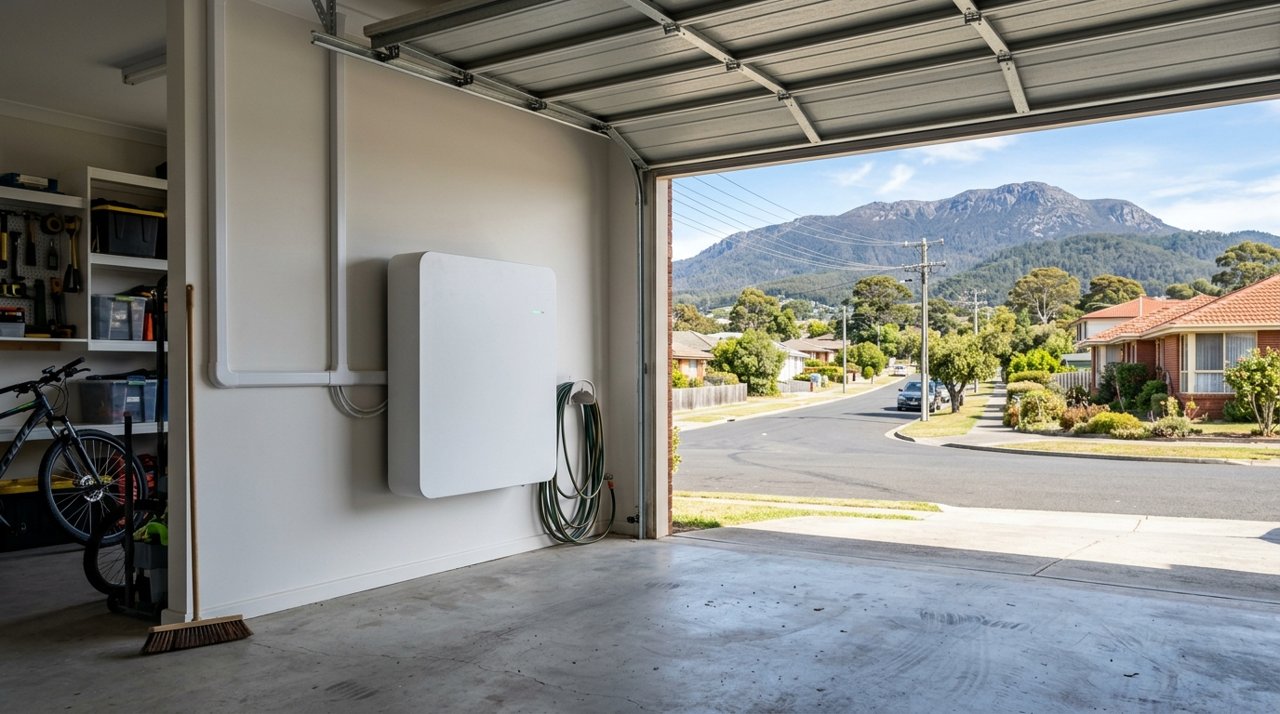
A solid-state battery replaces the liquid electrolyte inside today’s lithium-ion cells with a solid one. The promised payoffs are more energy in the same weight and space, and potentially better safety. As of 2026 the technology has not reached mass production anywhere in the world.
Two hurdles keep holding it up. The first is dendrites — tiny metal growths inside a cell that can short it out. The second is plain manufacturing cost: making solid layers reliably, millions of times over, is much harder than filling a cell with liquid.
Can I buy a solid-state home battery in Tasmania right now?
No. As of October 2026 there was no solid-state or semi-solid home battery on sale in Australia — or, as far as can be found, anywhere else. The home batteries launched during 2026 used lithium iron phosphate (LFP) or sodium-ion chemistry.
Worth knowing: the marketing language is being tightened up. China’s new national standard, in force from 1 July 2026, drops the term “semi-solid” in favour of “solid-liquid hybrid”, and reserves “all-solid-state” for batteries containing under 5% liquid. If anyone ever offers you a “solid-state” home battery, that distinction is the first thing to ask about.
When do the manufacturers themselves say it’s coming?
The dates you see in the news are targets, not sales figures — and they’re all about cars, not houses:
- Toyota, working with Idemitsu, is aiming for its first all-solid-state EV in 2027–28.
- Samsung SDI is targeting mass production in the second half of 2027.
- A US developer opened a pilot production line in February 2026 and is shipping samples to customers.
- A semi-solid (“solid-liquid hybrid”) EV went on sale in China in December 2025 — with roughly the same 530 km range as the cheaper lithium-iron-phosphate version of the same car.
That last one is the most instructive. The first hybrid-electrolyte car on the road didn’t beat the ordinary LFP model it sits beside in the showroom. Cars are where the money and the urgency are; a home product would follow a proven automotive one, not lead it.
Would solid-state even improve a home battery much?
Honestly, less than you’d expect. The headline benefit of solid-state is more energy per kilogram and per litre — which is a big deal in a car that has to carry its own battery around, and close to irrelevant for a box bolted to your garage wall.
| What matters most | In an EV | In a Tasmanian home battery |
|---|---|---|
| Weight per kWh | Critical | Barely matters |
| Size per kWh | Critical | Usually fine — it’s a wall or garage |
| Price per usable kWh | Important | Critical |
| Cycle life and warranty | Important | Critical |
| Safety | Critical | Critical |
On the three rows that matter at home, today’s LFP batteries are already strong.
What do today’s home batteries actually offer?
Most mainstream LFP home batteries carry a 10-year warranty, typically to around 70% of original capacity, with some offering 12–15 years. Cycle ratings of 6,000 or more are common. LFP is chosen precisely because it’s safe and long-lived.
Prices have also been moving in your favour. BloombergNEF found stationary storage battery pack prices fell to US$70/kWh in 2025 — down 45% in a single year, making it the cheapest battery segment of all. The “wait for prices to drop” argument has already partly played out.
Does waiting actually cost me anything?
Yes, and this is the part most people miss. The federal Cheaper Home Batteries Program discount is paid as certificates per usable kWh, and the number of certificates steps down every six months:
- 6.8 for May–December 2026
- 5.7 from 1 January 2027 (roughly 16% fewer)
- 5.2 from July 2027, 4.6 from January 2028, 4.1 from July 2028
- 3.6 from January 2029, 3.1 from July 2029
- 2.6 from January 2030, 2.1 for July–December 2030
The program ends on 31 December 2030, the battery must be paired with solar, and the dollar value of each certificate also depends on its market price at the time. Eligibility depends on the battery, the installer and the program rules being met — it isn’t automatic. In the program’s first 12 months, 457,439 home batteries totalling 12.9 GWh were installed nationally.
So “waiting for solid-state” isn’t a free option. Every six months you wait, the help shrinks — and there’s no date anyone can point to for proven, affordable solid-state home storage.
What does any of this mean on a Tasmanian power bill?
In Tasmania the battery question is decided by self-consumption, not by chemistry. From 1 July 2026 the regulated solar feed-in tariff is 9.276 c/kWh (up from about 8.8c), while importing power costs roughly 28–30 c/kWh. Every kWh you store and use yourself is worth far more than one you export.
A few Tasmanian specifics shape the maths:
- Tariff 93 (residential time-of-use) is the default — every new or upgraded residential connection has been assigned to it since 1 July 2024. It’s whole-of-home, with peak on weekdays 7–10am and 4–9pm (8–11am and 5–10pm during daylight saving) and everything else, including all weekend, off-peak.
- Tariff 97 is the newer opt-in tariff for homes with solar, a battery or an EV. It’s the only one with a super off-peak rate (midnight–4am every day, weekends included), its peak runs weekdays 7–10am and 4–10pm, all other times are off-peak, and it carries an excess demand charge above 8.5 kW. Whether you can get a Tariff 97 plan depends on your retailer.
- Tariffs 31 and 41 are the legacy flat-rate pair, closed to new installations on 30 June 2024; existing homes may stay on them. Neither is time-of-use.
- There is no separate Tasmanian state battery rebate, and no vendor or retail VPP operates here. Wholesale-price exposure does exist through spot-passthrough retailing, and automated battery control can charge when spot prices go negative and avoid peak imports — we run exactly this on our own systems.
Be clear-eyed: Tasmania’s relatively cheap power and fair feed-in tariff mean a battery generally pays for itself more slowly here than on the mainland. For a typical Aurora-tariff household without spot exposure, the value is self-consumption plus outage backup. Published payback ranges for the battery portion tend to be considerably longer than for the solar portion, and your own figure depends entirely on your usage, tariff and price.
So should I wait for solid-state?
Decide on the battery, not the chemistry.
- If a battery already stacks up for your home today — you want backup through a storm outage, you’re exporting a lot of midday solar for 9.276c, or you have wholesale-price exposure — then waiting years for solid-state means going without the benefit and collecting a smaller rebate.
- If a battery doesn’t stack up for you today, waiting is perfectly reasonable. Just wait because of your own numbers, not because solid-state is around the corner. Nobody can say when proven, affordable solid-state home batteries will arrive.
One more thing worth separating: solar and battery are two decisions, not one. Solar generally pays back faster, and a battery is the optional second step. For most Tasmanian homes that will electrify over time — an EV, a heat pump, induction cooking — around 13kW of panels on a 10kW inverter (the 133% oversizing rule) is a sensible, future-proof default, and TasNetworks allows a 10kW single-phase inverter here, so three-phase usually isn’t needed. A very low-use home with no EV, battery or electrification plans may genuinely suit something smaller. The federal STC rebate discounts the system cost either way; Tasmania sits in STC Zone 4.
The practical takeaway: get your solar sized right for the home you’ll have in ten years, then judge a battery on four things you can actually check today — price per usable kWh, warranty years and the minimum capacity the warranty covers, cycle rating, and which rebate step you’d be buying in. If those numbers work, the chemistry on the label is the least of your worries. If they don’t, revisit it in a year when prices and your own usage have moved — that’s a better trigger than a press release.
This free guide is written by the Tasmanian solar team at Solar Generation Tasmania — if something here raises a question about your own place, we’re always happy to talk it through.
#solargentas #solargen #solargenerationtasmania
Published by Solar Generation Tasmania. General information current as at publication — rebates, tariffs and prices change, so confirm current figures before deciding.
Thinking about solar for your place?
Tell us a little about your home and a local Tasmanian installer will put together a free, no-obligation assessment — system, battery and the rebates you qualify for.
- Honest advice for Tasmanian conditions (Zone 4 sun, hydro grid)
- We apply every rebate you’re eligible for
- Local installers — not a mainland call centre
- SAA-accredited, with degree-qualified owners and 10+ years in tech & solar