
← Blog · 29 June 2026
Tasmanian Power Prices and Solar Feed-in Tariffs to Rise From July 1
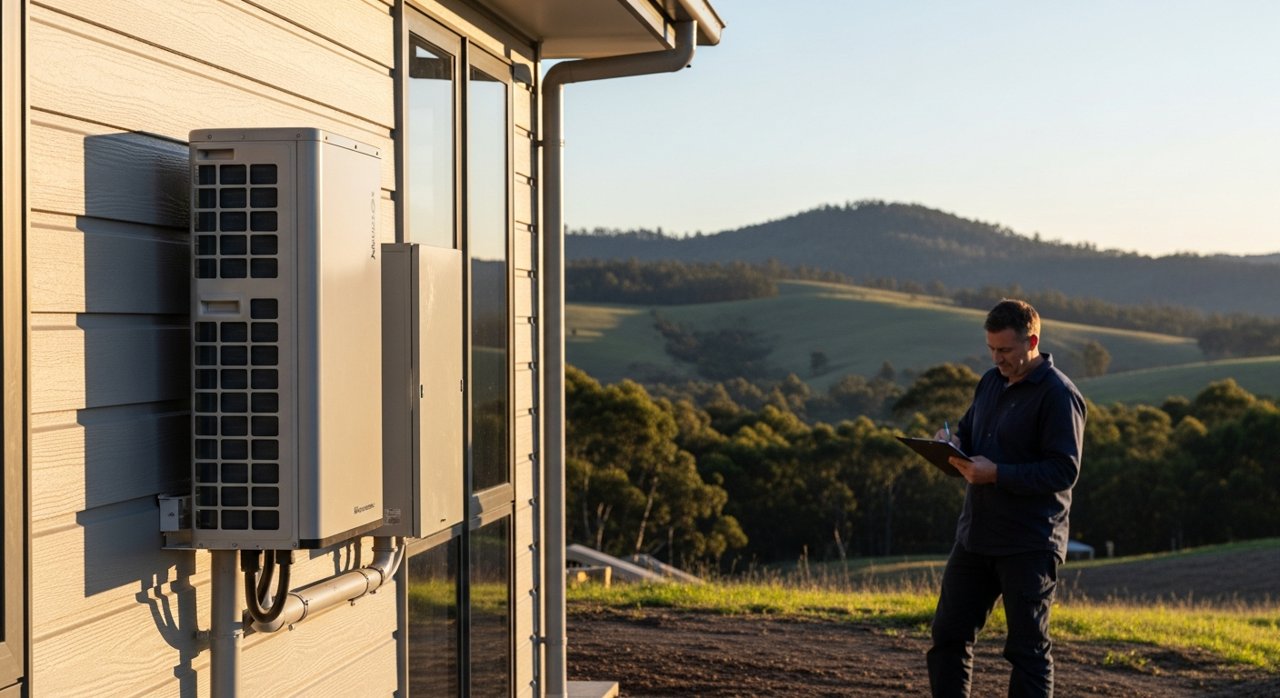
Recent weeks have brought significant news for Tasmania’s energy landscape, with regulators announcing changes to both electricity prices and the rates paid for solar exports, while new national grid plans have reaffirmed the growing role of household solar and batteries.
On June 25, the independent Tasmanian Economic Regulator announced that from July 1, 2026, regulated standing offer electricity prices from Aurora Energy will increase by an average of 4.23 per cent for residential and small business customers. In a statement, Tasmanian Treasurer Eric Abetz said the change reflects cost pressures affecting the entire national energy system, primarily driven by higher network costs. These network charges, which cover the cost of maintaining the poles and wires that deliver power, were approved by the Australian Energy Regulator in April after being proposed by TasNetworks.
In a concurrent announcement on June 25, the Tasmanian Economic Regulator delivered positive news for solar owners, revealing the minimum solar feed-in tariff (FiT) will increase by 5.6 per cent to 9.276 cents per kilowatt-hour (kWh), also effective July 1. The regulator stated this increase is primarily due to higher wholesale electricity costs and national market participation fees. For a Tasmanian homeowner, this means that while the cost of importing power from the grid is going up, the financial credit received for exporting surplus solar energy will also rise, slightly improving the economic case for solar generation.
This local adjustment comes as the Australian Energy Market Operator (AEMO) released its landmark 2026 Integrated System Plan (ISP) on June 25. The ISP is the official roadmap for the future of the national electricity grid. AEMO significantly increased its forecast for the uptake of home batteries, now expecting 35 gigawatts of capacity to be installed by 2050, up from a previous 27-gigawatt forecast. The plan, as AEMO stated, shows consumers are leading the energy transition through their investment in “consumer energy resources” like rooftop solar and batteries.
The national plan has specific implications for Tasmania. The 2026 ISP identifies the “Tasmania REZ Expansion” as an “actionable” project, designed to increase the grid’s capacity to host more renewable energy generation. On June 25, AEMO began formal consultation on this project, specifically calling for “non-network options” — such as strategically placed batteries — that could help deliver this capacity. This initiative is a key step in enabling larger projects like Marinus Link and integrating more large-scale renewables into the state’s grid.
Nationally, the boom in home batteries is being accelerated by the federal government’s Cheaper Home Batteries Program. Reports in late May and June 2026 confirmed the remarkable success of the scheme, with over 400,000 home batteries installed across Australia in less than a year. However, homeowners considering a battery should be aware that the program’s subsidy structure was changed on May 1, 2026. The Clean Energy Regulator implemented a new tapered system where the rebate value declines every six months and is reduced for larger battery systems. The full rebate factor is now applied to the first 14 kWh of a battery’s capacity, with lower rates of support for capacity beyond that threshold.
On the technology front, new, more efficient solar panels are becoming the norm. Industry analysis in June 2026 highlighted that TOPCon (Tunnel Oxide Passivated Contact) cells are rapidly replacing older PERC technology as the market standard, offering better performance in Australian conditions. Further ahead, a research project announced by UNSW on June 26 aims to use artificial intelligence to manage shared solar and battery systems for apartment buildings, tackling a key barrier to wider solar adoption.
These developments show that while grid electricity costs are rising, policy and technology continue to shape the role of household solar and battery storage within Tasmania’s energy future.
#solargentas #solargen #solargenerationtasmania
Published by Solar Generation Tasmania. General information current as at publication — rebates, tariffs and prices change, so confirm current figures before deciding.
Thinking about solar for your place?
Tell us a little about your home and a local Tasmanian installer will put together a free, no-obligation assessment — system, battery and the rebates you qualify for.
- Honest advice for Tasmanian conditions (Zone 4 sun, hydro grid)
- We apply every rebate you’re eligible for
- Local installers — not a mainland call centre
- SAA-accredited, with degree-qualified owners and 10+ years in tech & solar