
← Blog · 29 July 2026
Tasmanian Power Prices Rise, But Solar Feed-in Tariffs Also Get a Boost in Winter Update
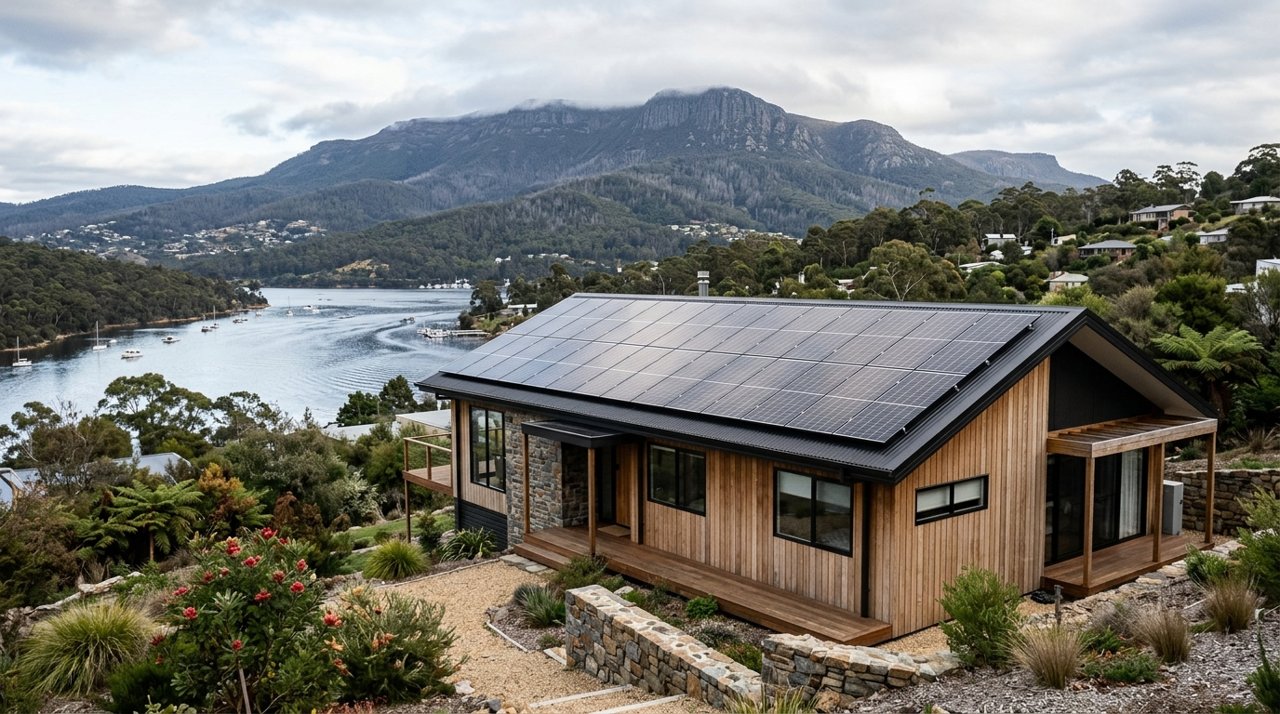
In late June and July 2026, a series of regulatory and market updates have reshaped the financial landscape for Tasmanian homeowners considering solar energy. Key changes include a state-level electricity price hike and an increased solar feed-in tariff, both effective from July 1, alongside the release of a new national energy roadmap that heavily features home solar and batteries.
The most immediate development for Tasmanians came on June 25, when the Tasmanian Economic Regulator (TER) announced its approved prices for Aurora Energy for the 2026-27 financial year. From July 1, regulated standing offer electricity prices for residential and small business customers increased by an average of 4.23 per cent. The regulator stated this would add approximately $108 to the annual bill of a typical residential customer. The primary driver for the increase was identified as higher network charges approved for TasNetworks to maintain the state’s poles and wires, which was partially offset by a reduction in national renewable energy scheme costs.
However, in the same announcement, the TER delivered positive news for solar owners. The regulator increased the minimum solar feed-in tariff (FiT) by 5.6 per cent, lifting the rate from 8.782c/kWh to 9.276c/kWh. This is the price energy retailers must pay solar households for surplus electricity exported to the grid. Aurora Energy noted the increase was due to factors including higher wholesale electricity costs and market participation charges. For a Tasmanian homeowner, this means that while the cost of drawing power from the grid has risen, the credit received for sending excess solar power back has also become slightly more valuable.
On the national front, the Australian Energy Market Operator (AEMO) on June 25 released its 2026 Integrated System Plan (ISP), a comprehensive blueprint for the future of the national electricity grid. The report described home solar and batteries as “fundamentally changing” the energy system. AEMO’s plan forecasts that rooftop solar capacity will quadruple to 87GW by 2050, with two-thirds of those homes also having a battery. The market operator emphasised the growing importance of these “consumer energy resources,” stating that coordinating them through Virtual Power Plants (VPPs) could avoid up to $5 billion in spending on new grid-scale storage. This long-term vision from the national grid operator reinforces the central role that household solar and storage are expected to play in Australia’s energy future.
This vision is supported by ongoing federal incentives, particularly for battery storage. The Cheaper Home Batteries Program, which provides a significant upfront discount on new batteries, remains in effect. While the program’s structure was reformed on May 1, 2026, to a tiered system, it continues to offer a substantial incentive. According to the Department of Climate Change, Energy, the Environment and Water, the program provides a discount of around 30% on eligible battery systems from 5kWh to 100kWh. In mid-2026, this equates to a discount of approximately $252 per usable kWh of battery capacity. This federal support directly lowers the entry cost for homeowners wanting to store their solar energy for use in the evenings, a key strategy for offsetting higher grid electricity prices.
There have been no recent changes to the primary federal rebate for solar panels, the Small-scale Renewable Energy Scheme (SRES). The scheme continues its scheduled, gradual phase-out, with the number of Small-scale Technology Certificates (STCs) generated by a new system reducing slightly each January. The market price for STCs, which dictates the value of the upfront discount, has remained stable, trading at around $39.85 in late July, according to market analysts.
In minor local administrative news, TasNetworks confirmed that from July 1, 2026, all applications for new solar connections must be submitted through its online portal, with paper-based forms being phased out.
These developments create a clearer picture for Tasmanians weighing their energy options as winter progresses.
#solargentas #solargen #solargenerationtasmania
Published by Solar Generation Tasmania. General information current as at publication — rebates, tariffs and prices change, so confirm current figures before deciding.
Thinking about solar for your place?
Tell us a little about your home and a local Tasmanian installer will put together a free, no-obligation assessment — system, battery and the rebates you qualify for.
- Honest advice for Tasmanian conditions (Zone 4 sun, hydro grid)
- We apply every rebate you’re eligible for
- Local installers — not a mainland call centre
- SAA-accredited, with degree-qualified owners and 10+ years in tech & solar