
← Blog · 26 June 2026
Tasmanian Solar Feed-in Tariff Rises Amid General Power Price Increase
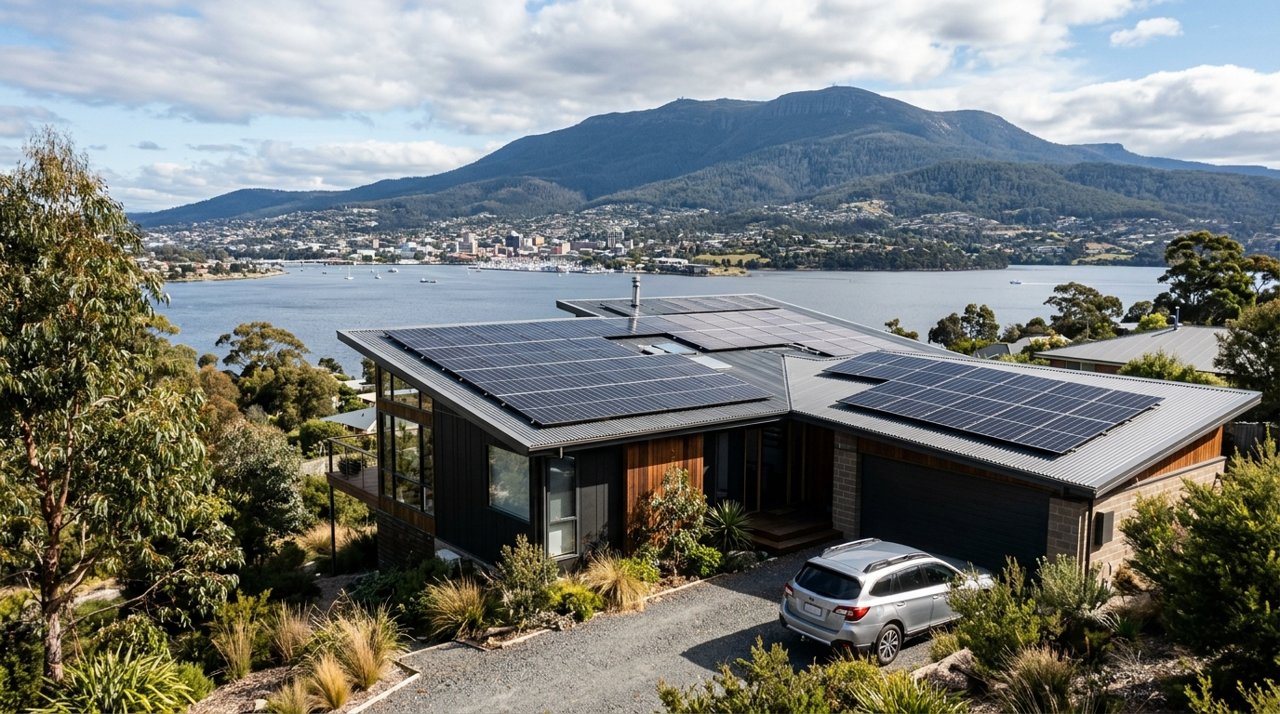
Hobart, TAS – 26 June 2026 – Tasmanian homeowners with solar panels will receive a higher rate for their exported power from next month, a welcome development announced alongside a general electricity price rise. In a key decision for the state’s energy landscape, the Tasmanian Economic Regulator has approved changes to both what residents pay for grid power and what they earn from their solar systems, effective 1 July 2026.
This news comes as the Australian Energy Market Operator (AEMO) released its 2026 roadmap, reinforcing the critical role of household solar and batteries in the national grid’s future.
Regulated Prices and Solar Tariffs Adjusted
On 25 June, the Tasmanian Treasurer, Eric Abetz, confirmed the independent Economic Regulator’s decision to increase regulated electricity prices. From 1 July, standing offer prices for residential and small business customers will rise by an average of 4.23 per cent. The government and the regulator attributed the increase primarily to higher network costs associated with maintaining and upgrading the state’s poles and wires, a cost passed on from TasNetworks. For a typical household, this is expected to add about $108 to their annual power bill.
In a significant move for solar owners, however, the regulator also approved a 5.6 per cent increase to the minimum solar feed-in tariff (FiT). This is the rate energy retailers like Aurora Energy must pay households for surplus solar power exported to the grid. The rate will climb from 8.782 cents to 9.276 cents per kilowatt-hour (c/kWh). This increase makes the economic case for self-consuming solar power stronger while also providing a better return on unavoidable exports.
In related news for those facing financial pressure, the Tasmanian Government and Aurora Energy on 23 June announced a doubling of the Energy Hardship Fund to $700,000 to provide greater support for customers struggling to pay their bills.
Federal Battery Rebate Program Overhauled
For Tasmanians considering adding battery storage to their solar systems, the federal Cheaper Home Batteries Program continues, but under a revised structure implemented on 1 May 2026. The federal government announced it had expanded the program’s total funding to an estimated $7.2 billion to ensure its longevity after the initial allocation was exhausted years ahead of schedule.
The original flat 30% discount was replaced with a tiered system. According to the Department of Climate Change, Energy, the Environment and Water, the change was designed to better align the subsidy with battery costs and discourage the installation of oversized systems. The rebate, which is applied as an upfront discount by installers, now provides the highest level of support for the first 14 kilowatt-hours (kWh) of a battery’s capacity, with the support tapering for larger systems. For a typical 10kWh home battery, the rebate still reduces the upfront cost by around $2,720. The underlying Small-scale Renewable Energy Scheme (SRES), which provides the point-of-sale discount for solar panels themselves, remains unchanged, with its value continuing to phase down each January as scheduled.
National and State Grid Developments
Looking at the bigger picture, the Australian Energy Market Operator (AEMO) published its final 2026 Integrated System Plan (ISP) on 24 June. The ISP is the official blueprint for the future of the national grid. It confirms that wind, solar, and storage remain the lowest-cost path for Australia’s energy future as coal-fired power stations retire. AEMO CEO Daniel Westerman highlighted the “galloping success” of battery storage, noting that the rapid uptake in homes and on the grid is “fundamentally changing” the electricity system.
In Tasmania, this long-term planning is taking concrete steps. On 25 June, AEMO began consultations on the “Tasmania REZ Expansion,” a project identified in the ISP to support the growth of renewable energy zones in the state. This follows a late-May announcement by the Tasmanian Government that two major new projects—the Weasel Plains Solar Farm and Cellars Hill Wind Farm—had secured federal government support under the Capacity Investment Scheme, representing a combined investment of up to $1.5 billion.
These developments signal a period of adjustment in both household energy costs and the incentives available for solar and battery technology in Tasmania.
#solargentas #solargen #solargenerationtasmania
Published by Solar Generation Tasmania. General information current as at publication — rebates, tariffs and prices change, so confirm current figures before deciding.
Thinking about solar for your place?
Tell us a little about your home and a local Tasmanian installer will put together a free, no-obligation assessment — system, battery and the rebates you qualify for.
- Honest advice for Tasmanian conditions (Zone 4 sun, hydro grid)
- We apply every rebate you’re eligible for
- Local installers — not a mainland call centre
- SAA-accredited, with degree-qualified owners and 10+ years in tech & solar