
← Blog · 7 August 2026
Tasmanian Solar Value Shifts as Power Prices Rise and National Battery Program Booms
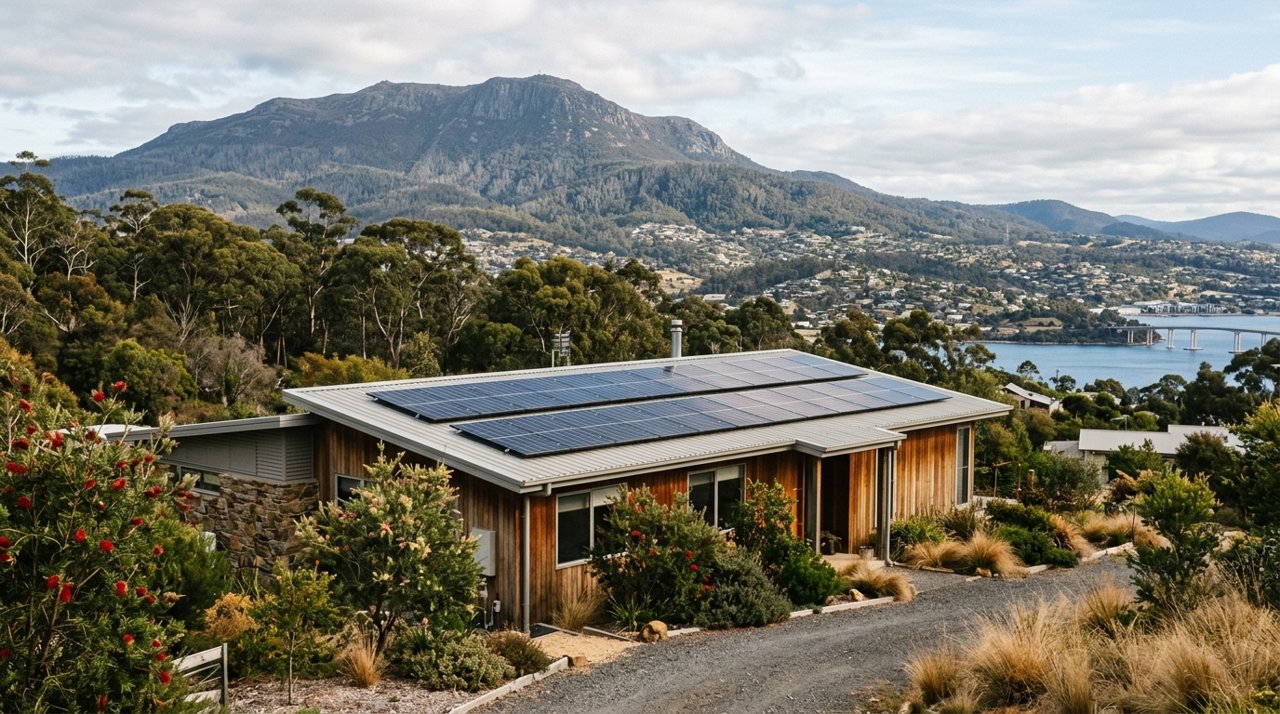
A series of regulatory and federal policy developments in July and early August 2026 have shifted the landscape for Tasmanians considering rooftop solar. Key changes include an increase to both regulated electricity prices and the solar feed-in tariff, alongside new data revealing the massive national uptake of home batteries and a major federal policy shift for larger-scale commercial solar.
Tasmanian Electricity Prices and Feed-in Tariffs Rise
Effective from 1 July 2026, the Office of the Tasmanian Economic Regulator (OTTER) approved new regulated electricity prices for Aurora Energy customers. The change resulted in an average increase of 4.23% for residential and small business standing offer tariffs. For a typical residential customer, this equates to an annual bill increase of around $108, as stated by the Regulator.
The main driver for the price rise was an increase in network costs approved for TasNetworks, which are passed on to consumers. The Regulator noted that while wholesale electricity costs had also risen slightly, the impact was primarily from the network component.
In a concurrent decision, OTTER also increased the minimum solar feed-in tariff (FiT) by 5.6% for the 2026-27 financial year. The new rate, which retailers must pay eligible customers for surplus power exported to the grid, is now 9.276 cents per kilowatt-hour (kWh). This increase was attributed to higher wholesale electricity price forecasts and other national market costs.
For a Tasmanian homeowner, this means the cost of importing electricity from the grid has risen, while the credit received for exporting solar has also slightly increased, altering the financial calculations for a solar investment.
Federal Battery Program Uptake Surges, Incentive Structure Holds
Nationally, the federal government’s Cheaper Home Batteries Program continues to drive unprecedented growth in energy storage. Figures released in early August 2026 showed that by the end of July, nearly 500,000 subsidised home battery systems had been installed across Australia since the program began in mid-2025. Federal Energy Minister Chris Bowen noted uptake was running at about 2,000 systems per day.
While no new changes were made in the last month, the market is now operating under the tiered incentive structure introduced on 1 May 2026. This structure provides the full rebate rate for the first 14 kWh of a battery’s usable capacity, with the rate tapering for larger systems. Market analysis from SunWiz released in August confirmed the policy was having its intended effect, with the average size of installed batteries falling by half since its peak in April, while still encouraging thousands of new installations each month. This means the federal incentive is now strongly geared towards typical residential-sized batteries rather than very large systems.
Major Federal Rebate Expansion for Commercial Solar
On 5 August 2026, the Federal Government announced a significant expansion of the Small-scale Renewable Energy Scheme (SRES), the mechanism that provides the upfront discount for rooftop solar. Minister Chris Bowen confirmed that from 1 October 2026, the eligibility threshold for creating Small-scale Technology Certificates (STCs) will be lifted from 100 kW to 1 MW.
This change is aimed at what the government calls the “missing middle”—commercial and industrial rooftops on factories, warehouses, and farms—which were previously too large for the SRES but too small for the large-scale scheme. While this is one of the biggest shifts in federal solar policy in years, it does not directly affect Tasmanian homeowners, as residential systems fall well below the existing 100 kW cap.
Grid and Technology Notes
On the technology front, market reports from July 2026 confirm that N-type TOPCon solar cells have become the mainstream standard for new quality installations, offering better efficiency and heat tolerance than older PERC panels. Locally, TasNetworks announced in early August that it was recruiting apprentices for a major, long-term overhaul of the state’s ageing grid infrastructure, signalling significant future investment in network reliability.
These recent changes highlight a landscape of rising grid electricity costs and evolving federal incentives, affecting the calculations for Tasmanian households considering solar and battery storage.
#solargentas #solargen #solargenerationtasmania
Published by Solar Generation Tasmania. General information current as at publication — rebates, tariffs and prices change, so confirm current figures before deciding.
Thinking about solar for your place?
Tell us a little about your home and a local Tasmanian installer will put together a free, no-obligation assessment — system, battery and the rebates you qualify for.
- Honest advice for Tasmanian conditions (Zone 4 sun, hydro grid)
- We apply every rebate you’re eligible for
- Local installers — not a mainland call centre
- SAA-accredited, with degree-qualified owners and 10+ years in tech & solar