
← Blog · 19 June 2026
What Size Solar System Does a Tasmanian Home Need?
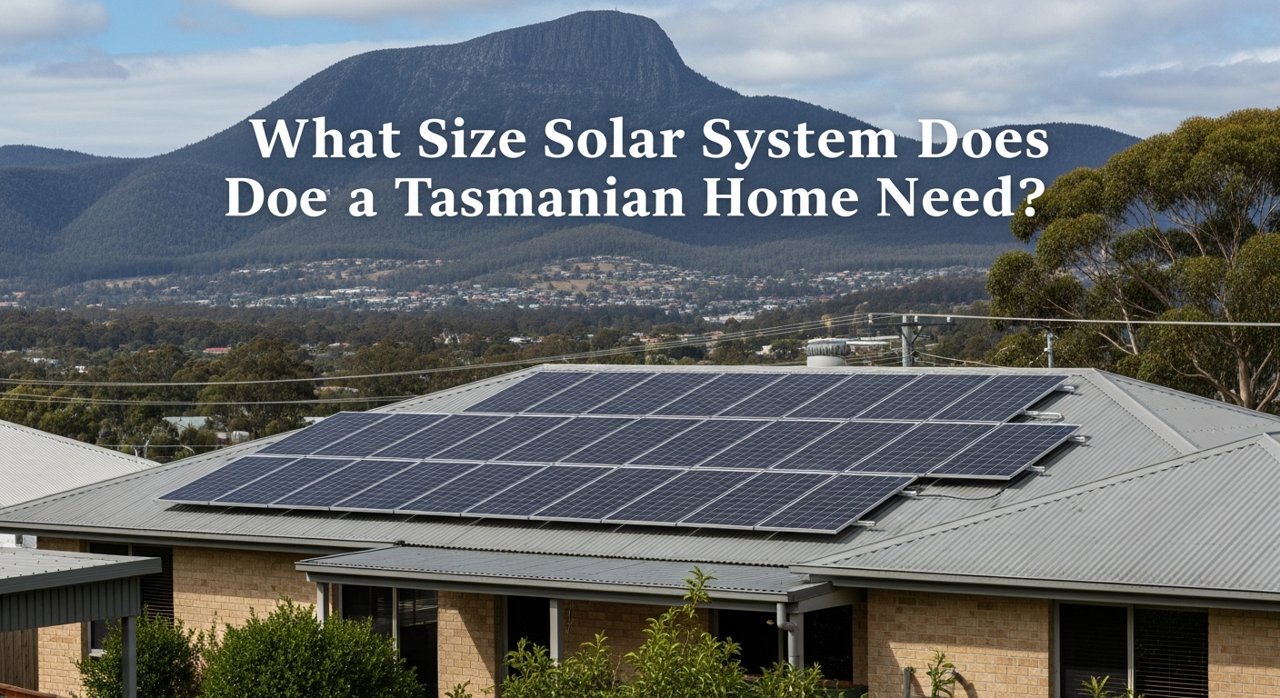
For years, the “standard” solar system for a Tasmanian home was 6.6 kilowatts (kW) of panels on a 5kW inverter. It was a great starting point. But times have changed. Our homes are changing, too.
The future is electric. Many of us are swapping gas heaters for efficient heat pumps, petrol cars for EVs, and old cooktops for induction. Each of these smart, clean-energy choices adds to our home’s electricity demand. A system designed for yesterday’s power bills can quickly become undersized.
Today, the smart choice for a Tasmanian household looking to future-proof their home is a larger system. Think ~13kW of panels paired with a 10kW inverter. This might sound like a big jump, but it’s perfectly aligned with where our energy needs are heading.
Why Self-Consumption is Everything in Tasmania
The key to saving money with solar in Tassie isn’t selling power back to the grid; it’s using the power you generate yourself. This is called self-consumption.
Here’s the simple maths:
- Cost to import power: When you buy electricity from the grid (via Aurora Energy), you pay roughly 25-29 cents per kilowatt-hour (c/kWh).
- Credit for exporting power: When your solar system sends surplus power to the grid, the regulated feed-in tariff you receive is only around 9.3 c/kWh.
Every kilowatt-hour of solar power you use in your own home saves you the full 25-29 cents you would have otherwise paid. Every kilowatt-hour you export only earns you about 9.3 cents. The financial difference is huge. A larger solar system generates more energy during the day, giving you a bigger window to run appliances, heat your water, and charge your car for free.
Finding the Right Fit: System Sizes Explained
While a larger system is the new default, the right size always depends on your specific circumstances.
Small Systems (Under 6.6kW)
A smaller system can still be a good choice for households with very low electricity usage. If you’re a single person or a couple in a smaller home, don’t plan on getting an EV or heat pumps, and are home during the day to use the power as it’s generated, a smaller system can offer a quick payback.
The Future-Proof Default (~13kW panels on a 10kW inverter)
This is the new sweet spot for the average Tasmanian family home. Here’s why it works so well:
- Maximises Your Roof: It makes the most of your available roof space and the federal rebate.
- Handles Electrification: It has the capacity to power a heat pump for winter heating, charge an electric vehicle, and run an electric hot water system, all from the sun.
- TasNetworks Approved: Crucially, our grid distributor, TasNetworks, allows a 10kW inverter on a standard single-phase connection, which covers the vast majority of Tasmanian homes. You don’t need an expensive three-phase upgrade.
- CEC Rules: This setup perfectly utilises the Clean Energy Council’s rule allowing you to “oversize” your panel capacity by up to 133% of your inverter’s capacity. This means more power generation in the morning, late afternoon, and on overcast days.
Very Large Systems (Over 13kW)
For homes with exceptionally high usage—perhaps with multiple EVs, a heated swimming pool, or a large family—an even larger system might be necessary. These often require a three-phase power supply and a more detailed grid connection process with TasNetworks.
What About a Battery?
A solar battery stores your excess solar energy from the daytime so you can use it at night, instead of buying power from the grid. This is the ultimate form of self-consumption.
- Is it worth it? Financially, the payback period for a battery is longer than for panels alone, typically around 7-12 years. However, the new federal Cheaper Home Batteries program can significantly reduce the upfront cost. This program can provide a discount of around 30% on eligible battery installations.
- When does it make sense? A battery is a fantastic addition if your goal is maximum energy independence, blackout protection, or if your household uses most of its power in the evening.
For many, the best approach is to install a “battery-ready” larger solar system now. You can enjoy the immediate savings from the panels (which have a 4-6 year payback) and add a battery in a few years as prices continue to fall.
Understanding the Rebates
There are two key incentives that lower the cost of going solar in Tasmania:
- The Federal STC Rebate: This is a point-of-sale discount that all Tasmanians are eligible for. It’s based on the size of your system and our location in “STC Zone 4”. The rebate is factored directly into the price your installer quotes you, effectively knocking thousands off the upfront cost.
- The Cheaper Home Batteries Program: As mentioned, this new federal scheme offers a substantial subsidy on the cost of a new battery system, making it a much more attractive option.
These incentives are designed to make clean energy more accessible, and a reputable installer will handle all the paperwork for you.
Choosing the right size solar system is about finding the balance between your budget, your current energy use, and your future plans. For a growing number of Tasmanian households, thinking bigger isn’t just an option; it’s the most logical and financially savvy way to prepare for an all-electric future.
At Solar Generation Tasmania, we believe in giving honest, tailored advice without the high-pressure sales tactics. As an SAA-accredited Tasmanian installer with degree-qualified owners and over a decade of experience in technology and solar, we can help you analyse your energy use and design the perfect system for your home. Contact us for a no-obligation chat about your energy future.
#solargentas #solargen #solargenerationtasmania
Published by Solar Generation Tasmania. General information current as at publication — rebates, tariffs and prices change, so confirm current figures before deciding.
Thinking about solar for your place?
Tell us a little about your home and a local Tasmanian installer will put together a free, no-obligation assessment — system, battery and the rebates you qualify for.
- Honest advice for Tasmanian conditions (Zone 4 sun, hydro grid)
- We apply every rebate you’re eligible for
- Local installers — not a mainland call centre
- SAA-accredited, with degree-qualified owners and 10+ years in tech & solar