
← Blog · 21 July 2026
Winter vs Summer Solar Output in Tasmania: What to Expect
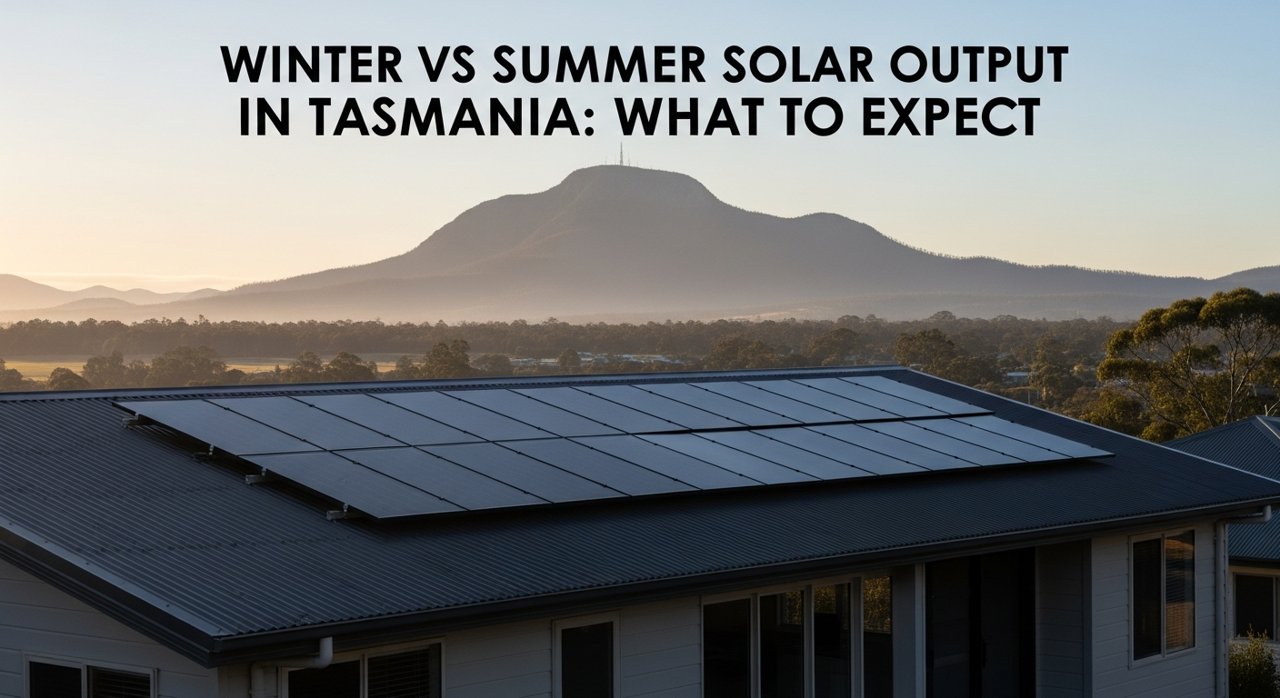
A solar power system in Tasmania will produce significantly less energy in winter than in summer, but it still generates a useful amount. On average, a north-facing system in Hobart in June might produce only about one-third of the power it does in December. This is due to shorter days, more cloud cover, and the sun being lower in the sky.
Even with this reduction, solar is a smart investment here. The key is to use the power you generate yourself, as this saves you from buying expensive electricity from the grid. While summer gives you an abundance of solar power, winter production still makes a real dent in your power bills, especially if you shift your energy use to the middle of the day.
Is my roof direction a deal-breaker in Tasmania?
North-facing panels will give you the most energy over a full year, but east and west-facing panels are also very effective in Tasmania. In fact, an east-facing array can be a great choice, as it captures the morning sun when households are often busy getting ready for work and school, helping you use that power directly.
An east-west split array (some panels facing east, some west) is another excellent option. This setup provides a broader, more consistent spread of power generation throughout the day, rather than a single sharp peak at noon. This can help you use more of your own solar power directly, which is where the biggest savings are.
What size solar system is right for a Tasmanian home?
For most Tasmanian households looking to future-proof their homes for things like an electric vehicle (EV) or a heat pump, a larger system is now the smart default. A system with around 13kW of panels paired with a 10kW inverter is a popular and effective choice. This takes advantage of the rule allowing you to “oversize” your panel array by up to 133% of your inverter’s capacity to maximise generation.
The good news is that in Tasmania, our network distributor TasNetworks generally allows a 10kW inverter on a standard single-phase connection, which most homes have. This means you can install a powerful, future-ready system without needing an expensive three-phase power upgrade. For a smaller household with very low electricity use and no plans to electrify, a smaller 6.6kW system might be sufficient.
How do solar savings actually work with Aurora Energy?
The biggest financial benefit of solar in Tasmania comes from self-consumption—using the power from your panels in your own home. When you use your own solar power, you avoid buying electricity from your retailer, like Aurora Energy, at a rate of roughly 28-30 cents per kilowatt-hour (c/kWh).
Any excess power you don’t use is sold back to the grid for a solar feed-in tariff. From 1 July 2026, the regulated rate is set to be 9.276 c/kWh. Because the price of buying power is about three times higher than the rate for selling it, the goal is to use as much of your own solar power as possible.
Here’s a simple comparison of the value:
- Value of self-consumed solar: ~28-30 c/kWh (the amount you save)
- Value of exported solar: 9.276 c/kWh (the amount you earn)
This difference is why shifting your high-energy tasks—like running the dishwasher, washing machine, or heat pump—to the middle of the day makes such a big difference to your savings.
Do government rebates still apply in Tasmania?
Yes, Tasmanian homeowners can access the main federal government incentive, which significantly reduces the upfront cost of a solar system. This is often called the “solar rebate” but is technically the Small-scale Renewable Energy Scheme (SRES).
Under this scheme, your system’s size and location determine how many Small-scale Technology Certificates (STCs) it’s eligible for. Your solar installer handles the process of claiming these STCs and applies the value as a point-of-sale discount on your quote. Tasmania is in STC Zone 4, which means we get a slightly lower rebate than sunnier parts of the mainland, but it still typically covers a substantial portion of the system cost.
Is a home battery worth it in Tasmania?
A home battery can be a great addition, but it’s important to be realistic about the financial payback in Tasmania. Our relatively low and stable electricity prices mean the payback period for a battery is generally longer here than on the mainland, often in the range of 7-12 years.
The main benefits of a battery in Tassie are:
- Maximising self-consumption: Storing cheap daytime solar power to use in the evening, when electricity costs are highest.
- Blackout protection: Providing backup power during grid outages, which can be a huge advantage in regional areas.
From 1 July 2025, the federal Cheaper Home Batteries Program may provide a discount of around 30% on the cost of an eligible battery when it’s installed with solar panels. This could reduce the upfront cost significantly. However, unlike on the mainland, opportunities to earn extra income from your battery through Virtual Power Plants (VPPs) are very limited in Tasmania’s hydro-dominated grid.
What is a realistic payback period for solar in Tasmania?
For a well-designed solar panel system in Tasmania, a typical payback period is around 4 to 6 years. This can vary depending on the system size, your upfront cost after the STC rebate, and how much of the solar power you are able to use yourself versus exporting to the grid.
Adding a battery will extend the total system payback period. While the solar panels might pay for themselves in 4-6 years, the battery component will take longer. The combined payback for a solar and battery system is more likely to be in the 7-12 year range, though government incentives like the Cheaper Home Batteries Program can help shorten this.
This guide was written by the team at Solar Generation Tasmania. We’re passionate about helping our fellow Tasmanians make informed, practical decisions about their energy future. If you have questions, we’re always happy to help.
#solargentas #solargen #solargenerationtasmania
Published by Solar Generation Tasmania. General information current as at publication — rebates, tariffs and prices change, so confirm current figures before deciding.
Thinking about solar for your place?
Tell us a little about your home and a local Tasmanian installer will put together a free, no-obligation assessment — system, battery and the rebates you qualify for.
- Honest advice for Tasmanian conditions (Zone 4 sun, hydro grid)
- We apply every rebate you’re eligible for
- Local installers — not a mainland call centre
- SAA-accredited, with degree-qualified owners and 10+ years in tech & solar